
Exhibition
Nicolás Sarmiento: Temperatura ambiente JULY 23 TO SEPTEMBER 5, 2026Nicolás Sarmiento
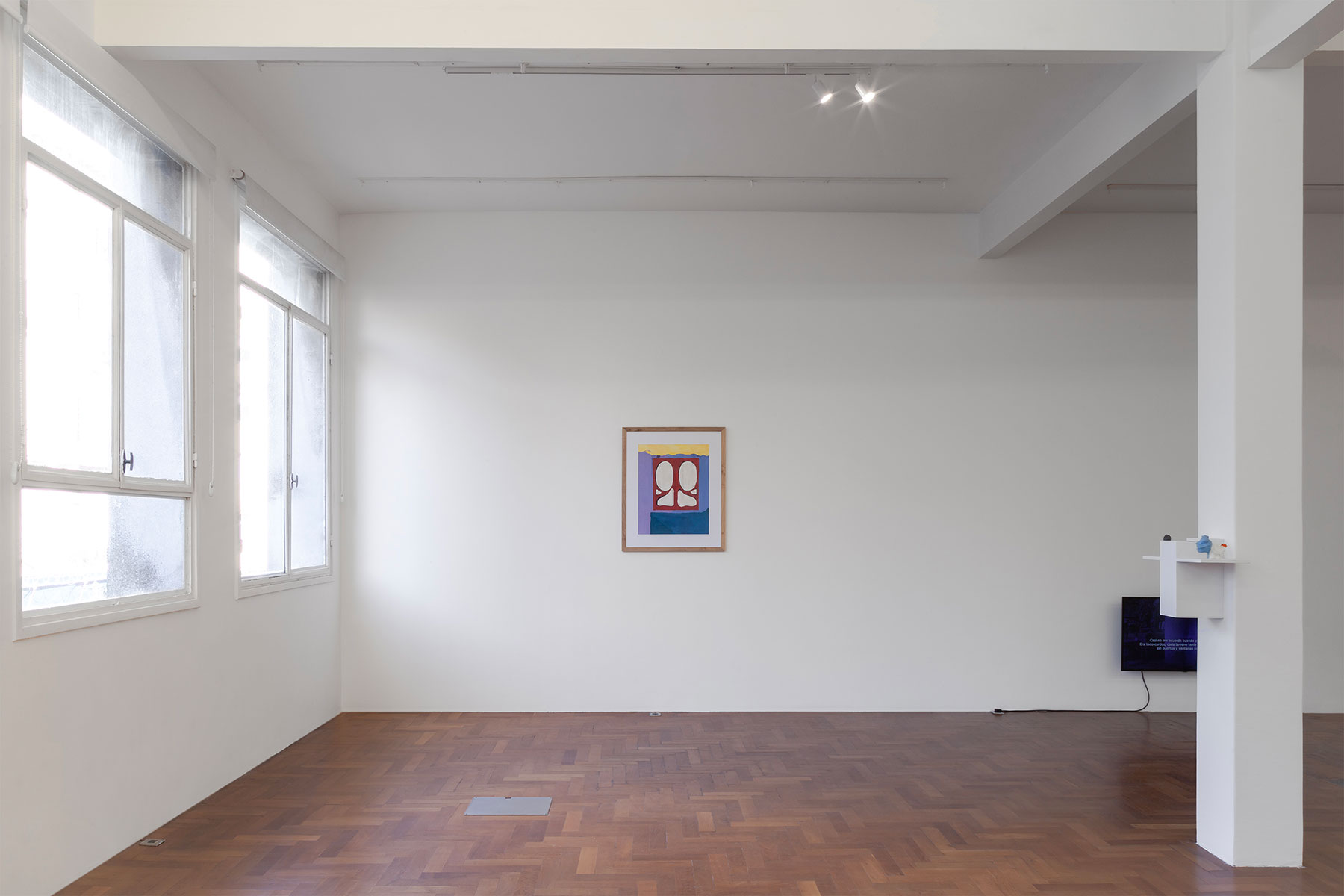
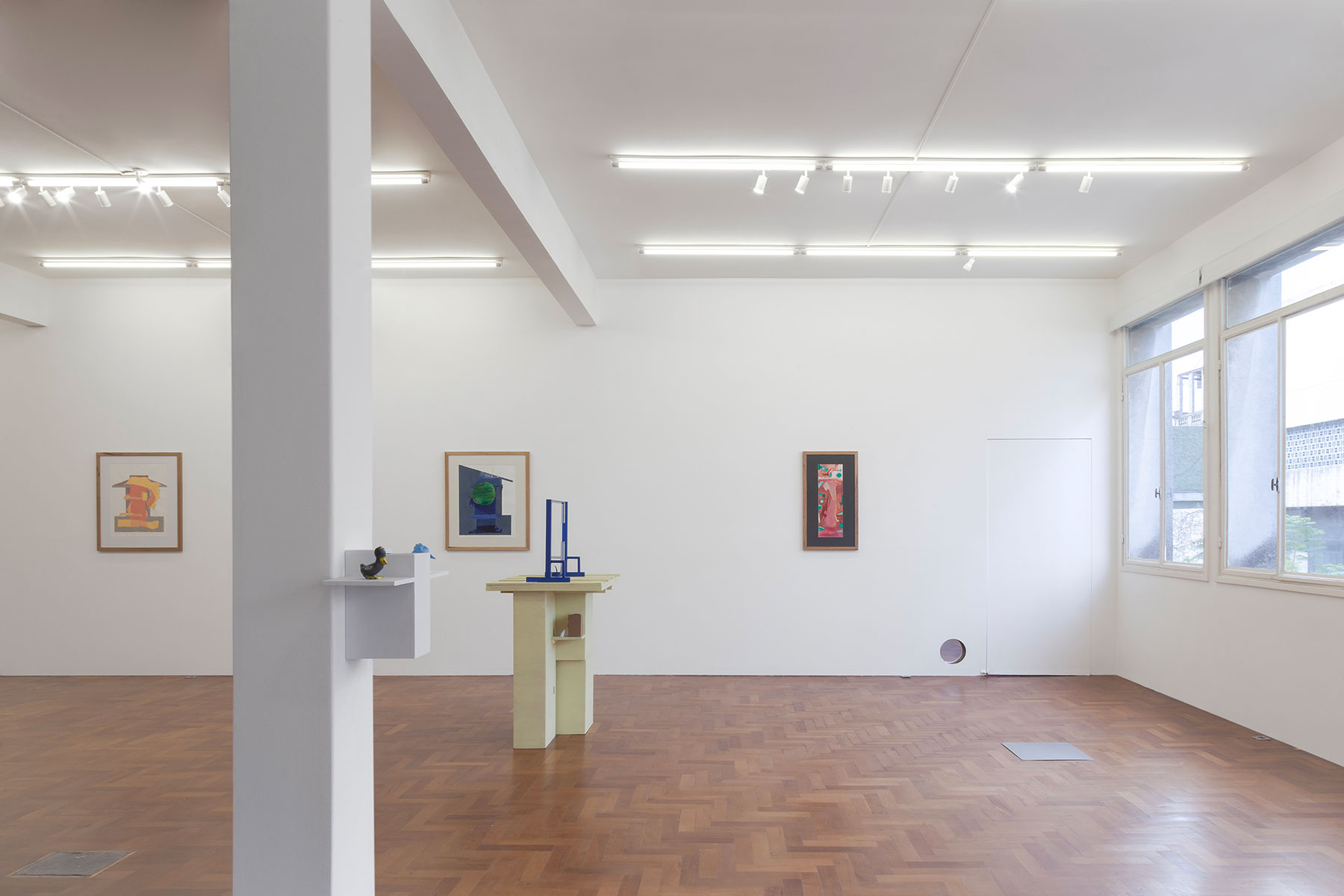
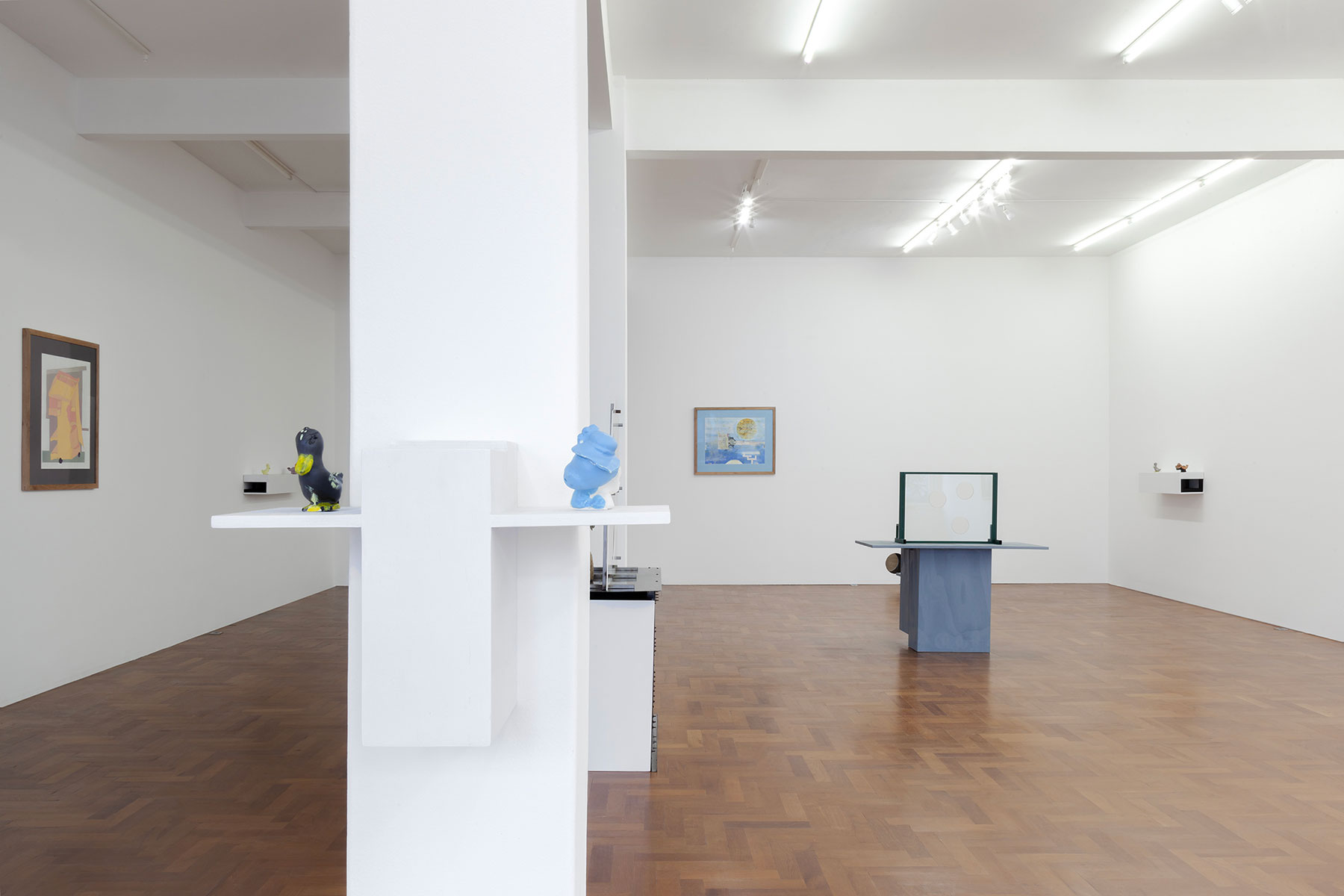
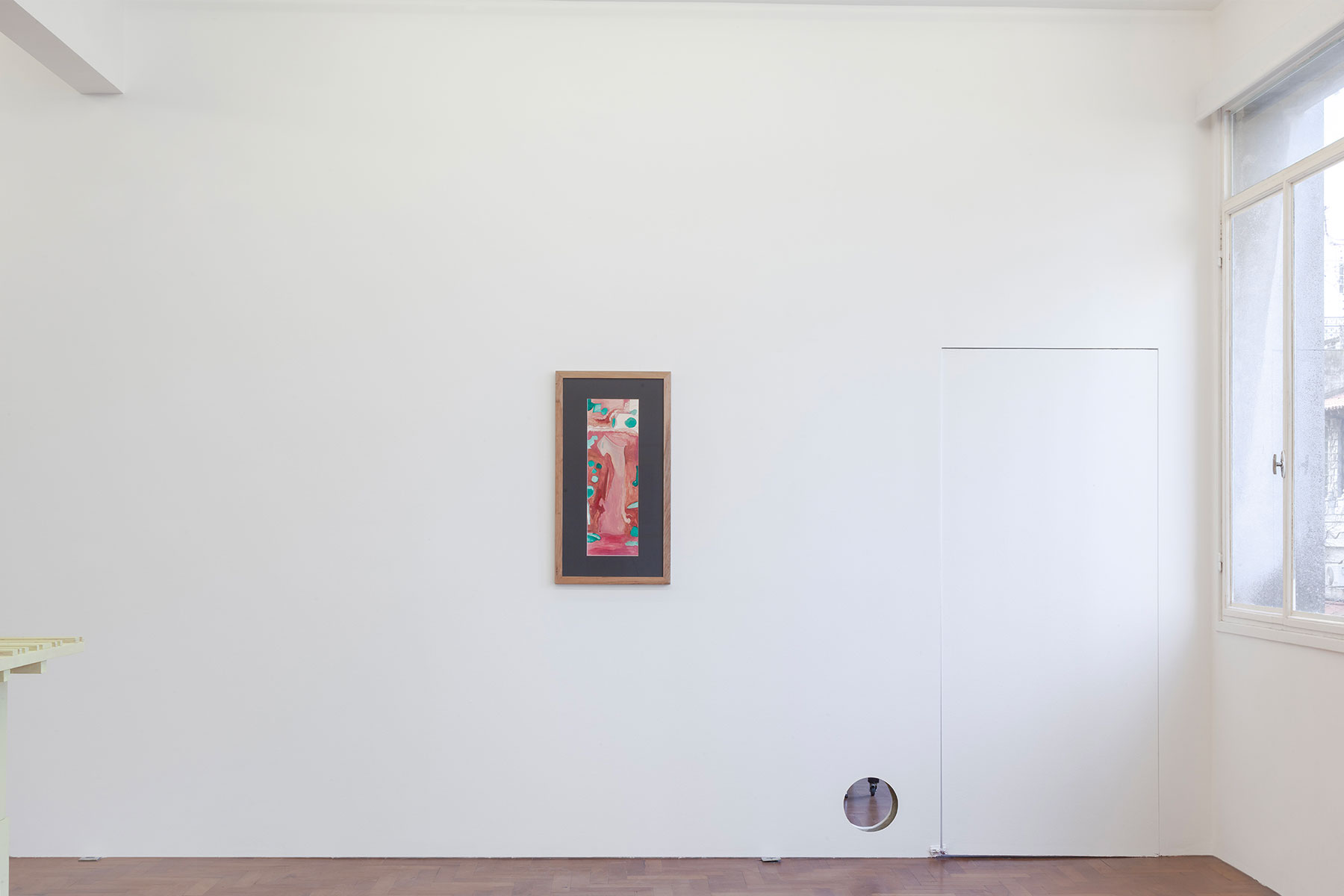
By Sofía Reitter
“Space is what arrests our gaze, what our sight stumbles over: the obstacle”
Georges Perec
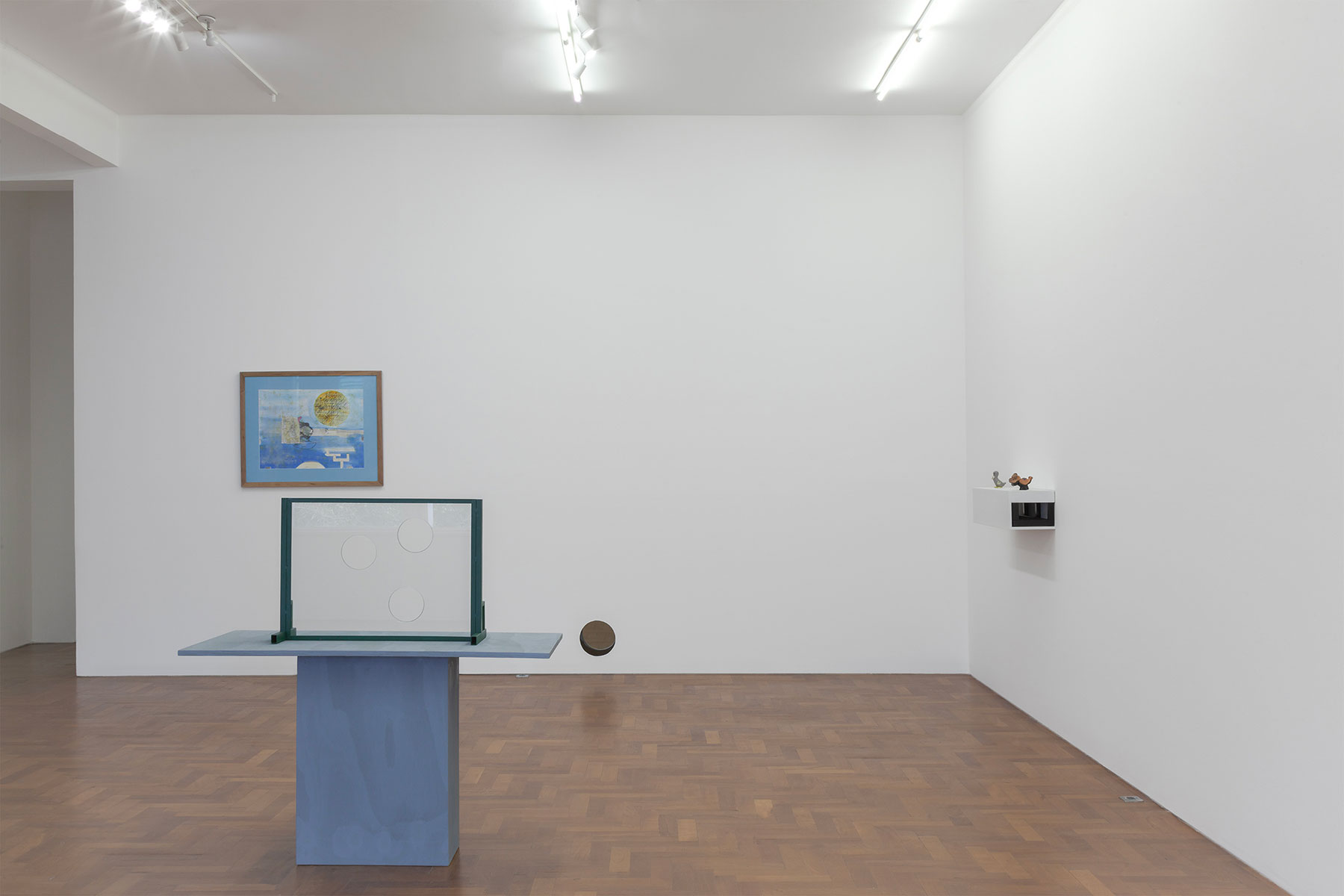
Communicating with someone through a partition is often an awkward experience. Whether at a corner shop, an old-fashioned payment office, a government agency, a hospital, or a bank while clutching a wad of banknotes that looks like a fortune but is worth very little. The barrier forces you to crane your neck or bend down to find the cut-out openings through which you can catch a better glimpse of the person on the other side or hear their voice more clearly. Depending on the sophistication of the setting, the partition may be made of plastic or glass, more or less rigid. The opening, however, is indispensable: only through that gap can anything pass from one side to the other.
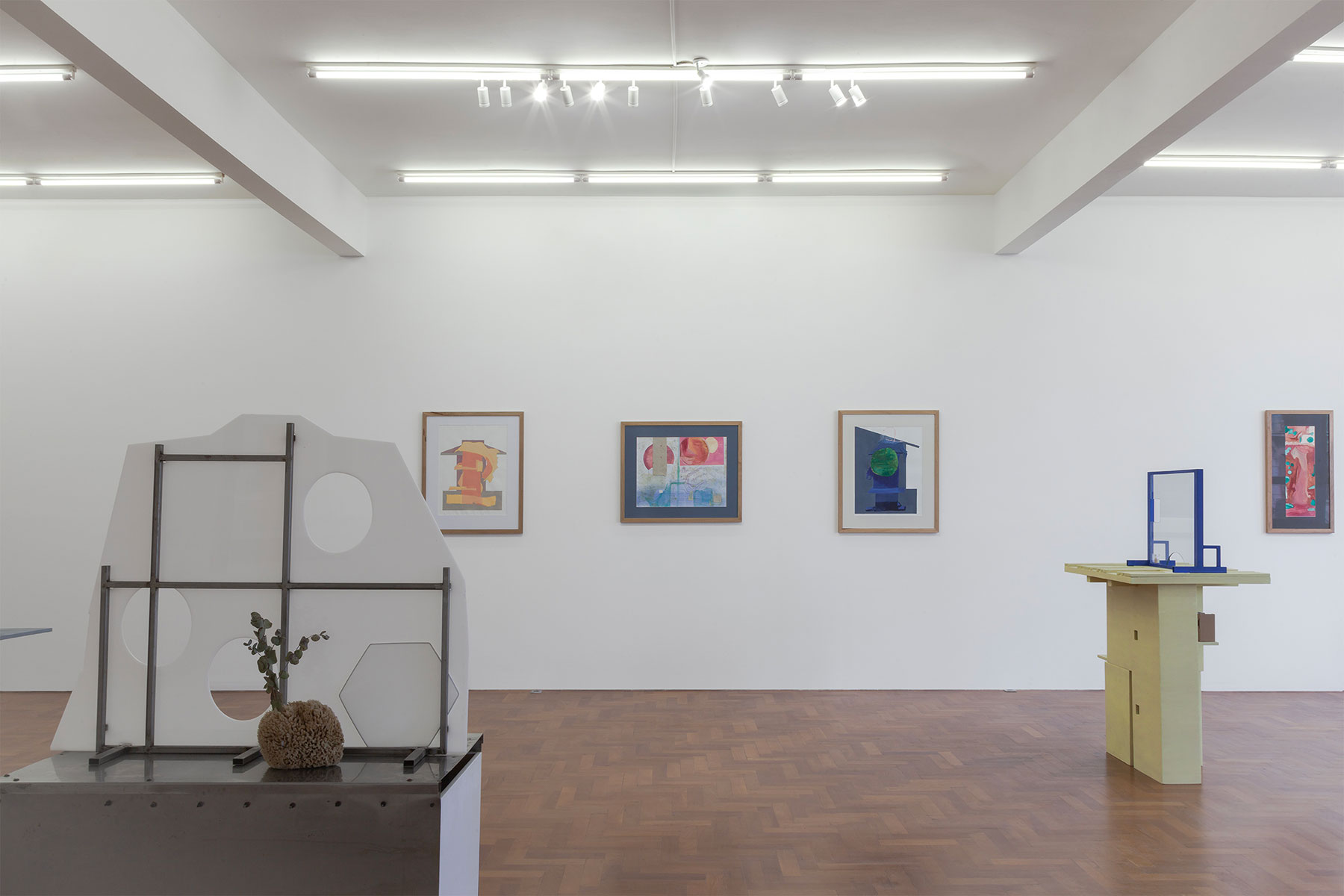
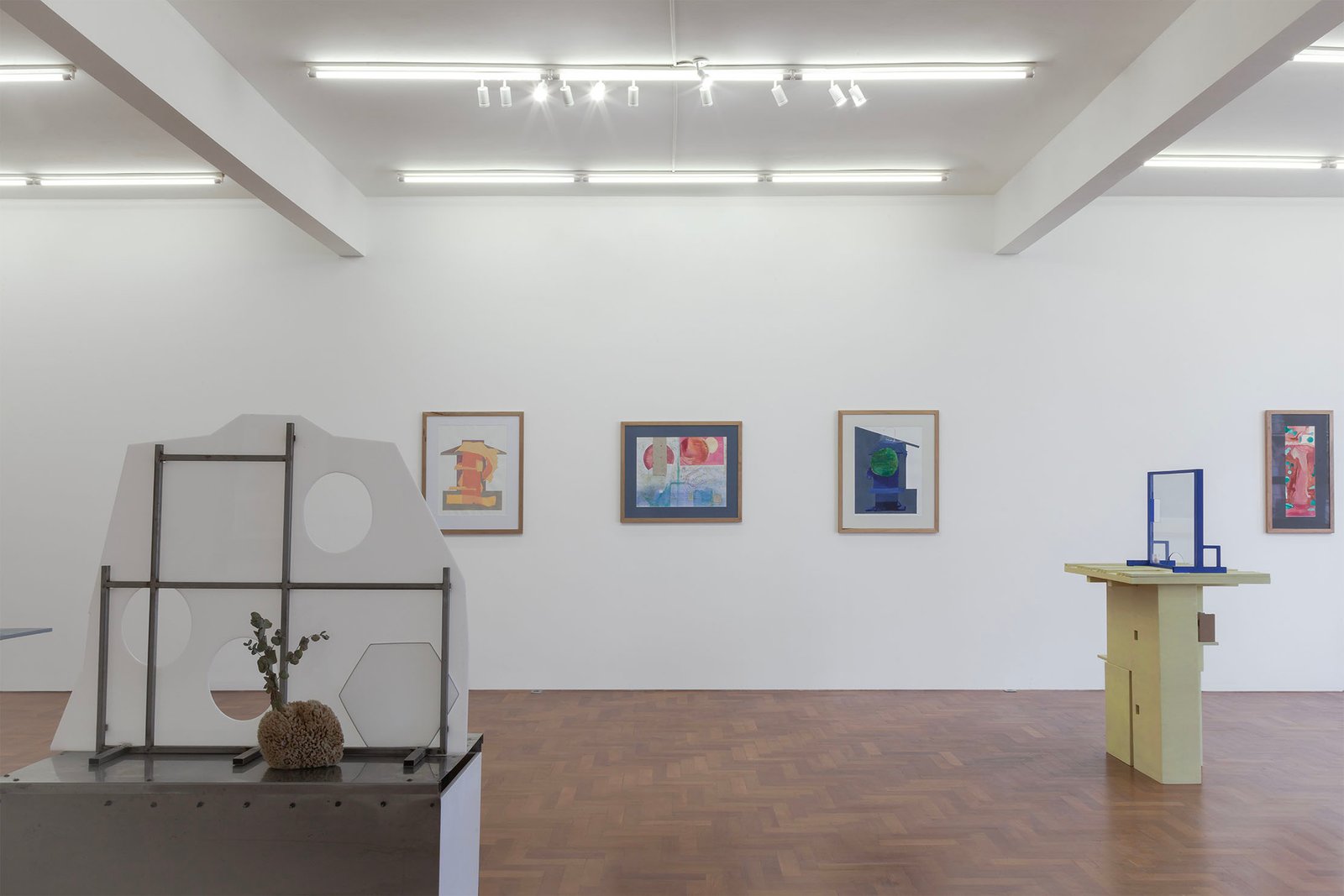
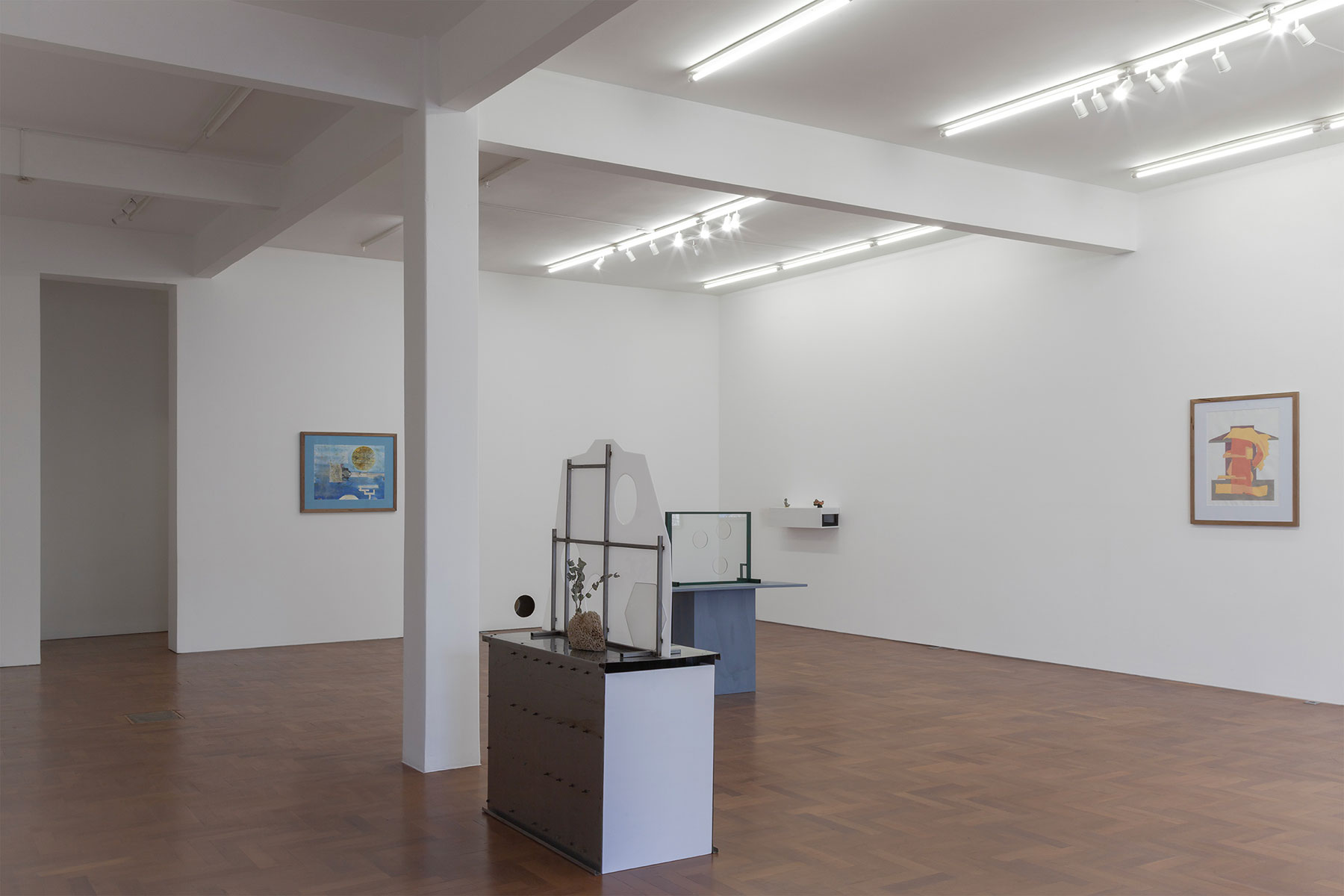
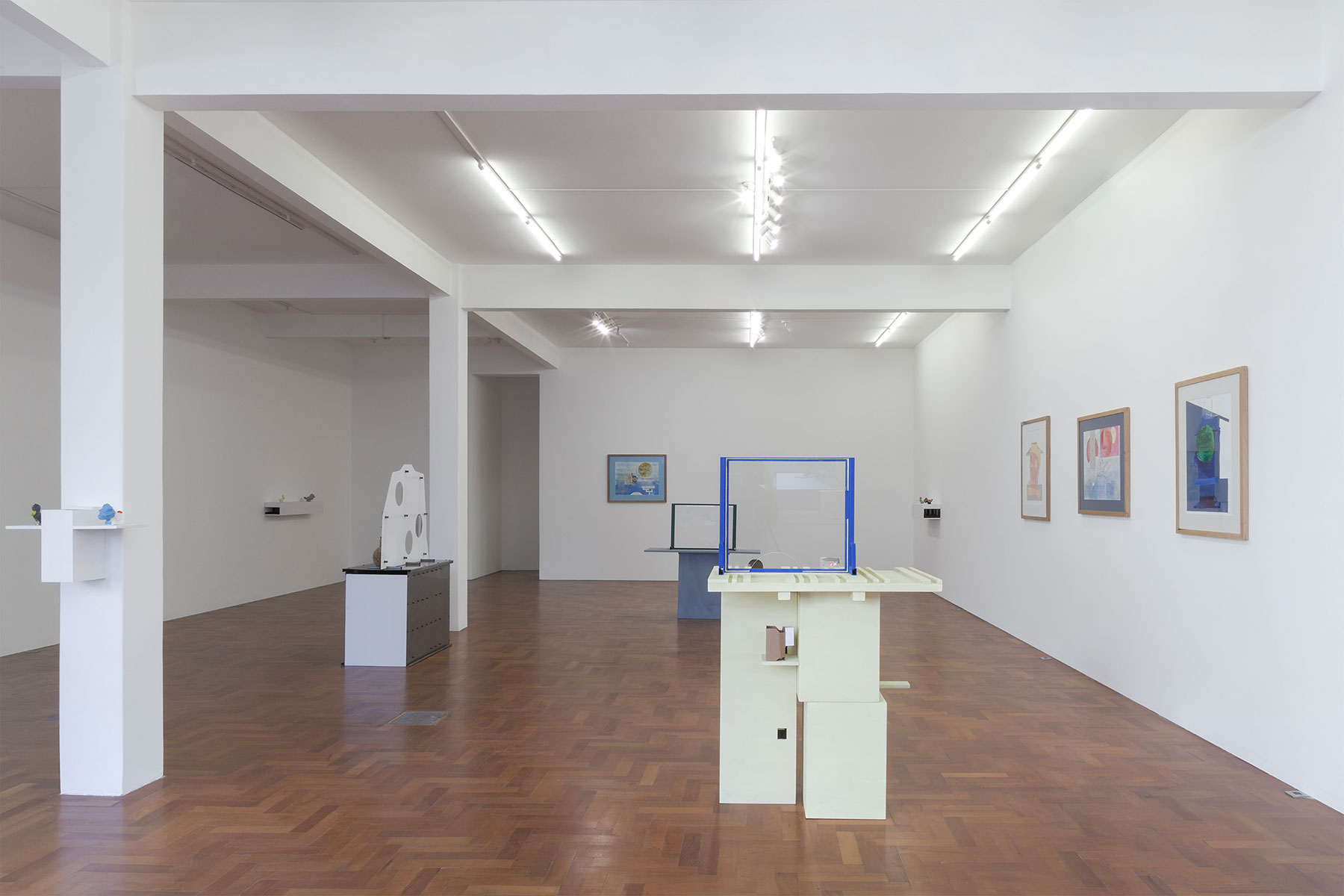
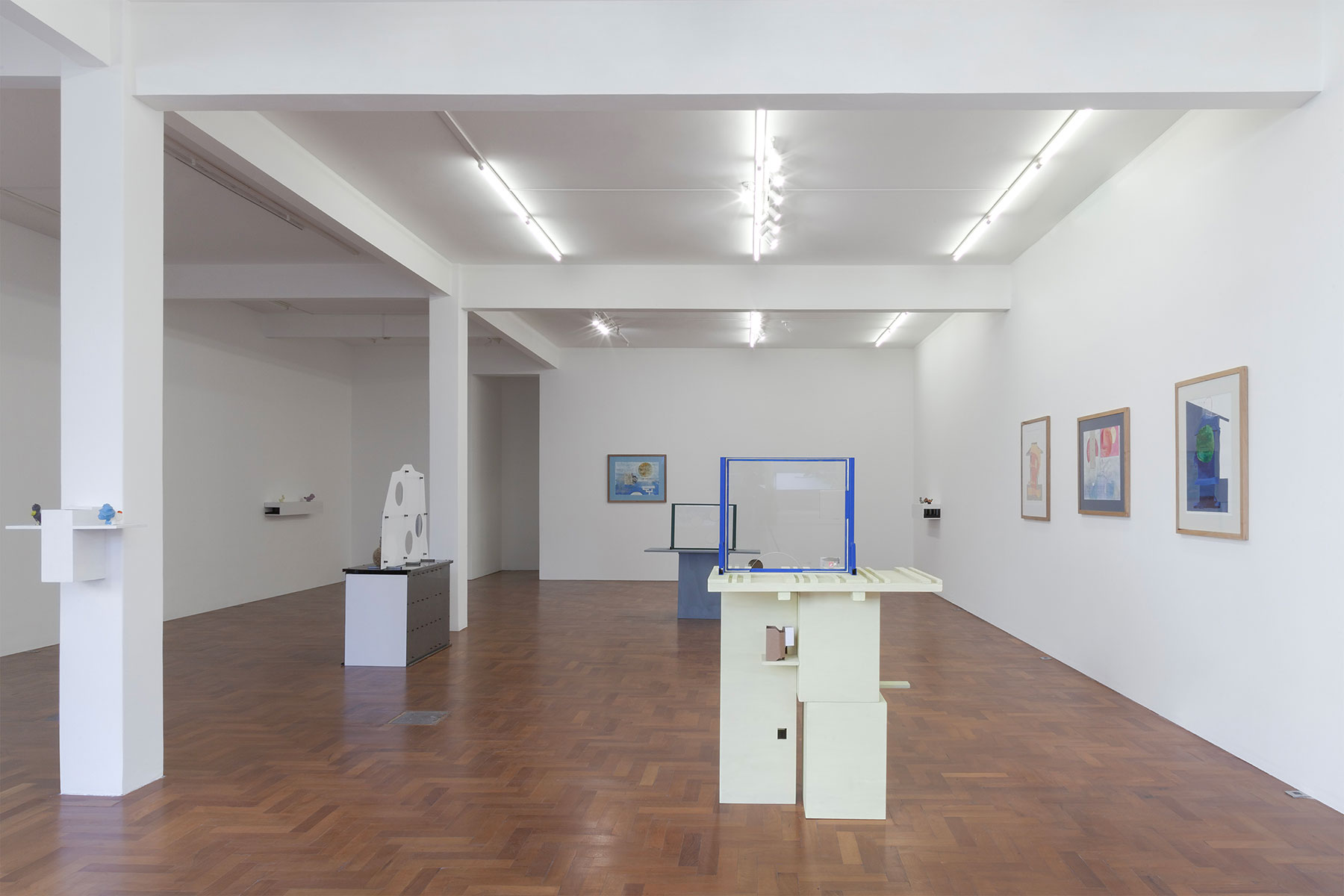
Temperatura Ambiente is Nicolás Sarmiento’s first solo exhibition in Argentina in eleven years. The works on view trace the developments in his practice following his move to Basel, Switzerland, in 2018, where he began investigating ideas related to industrial design, architecture, and display devices, introducing short circuits into their promised functions. Sarmiento constructs opaque displays, distorting individual elements as though working on a mechanism composed of discrete parts that can be manipulated independently.
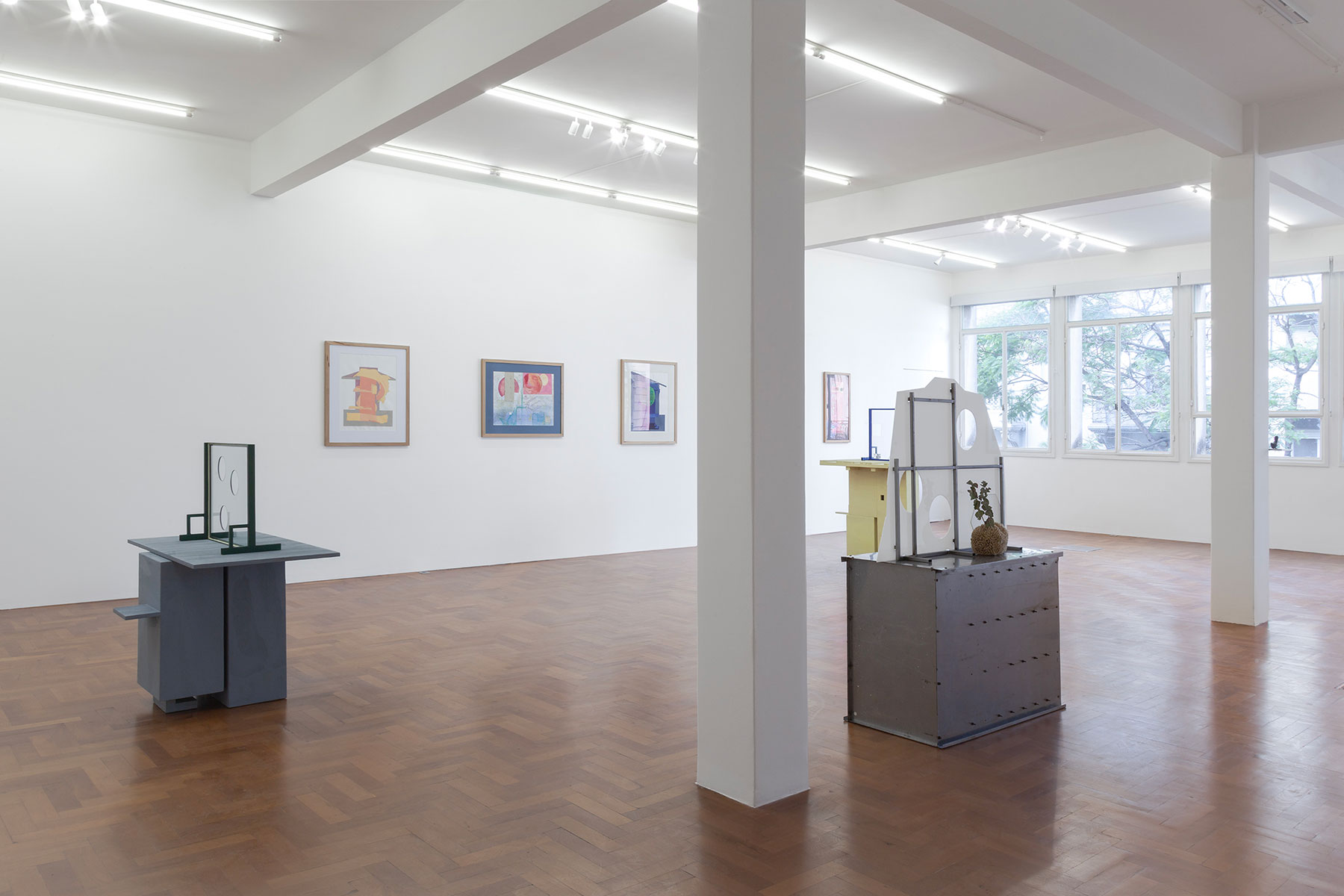
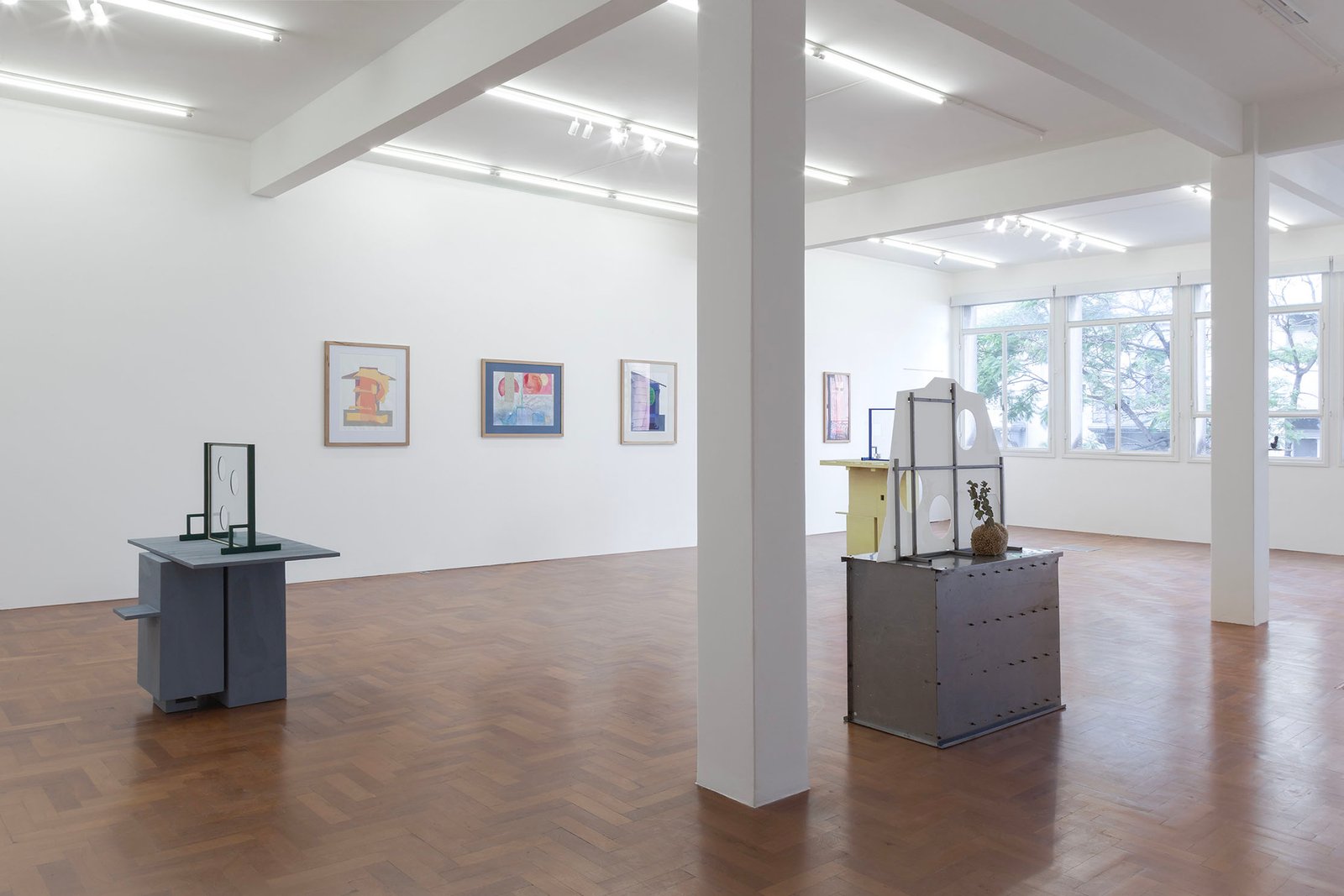
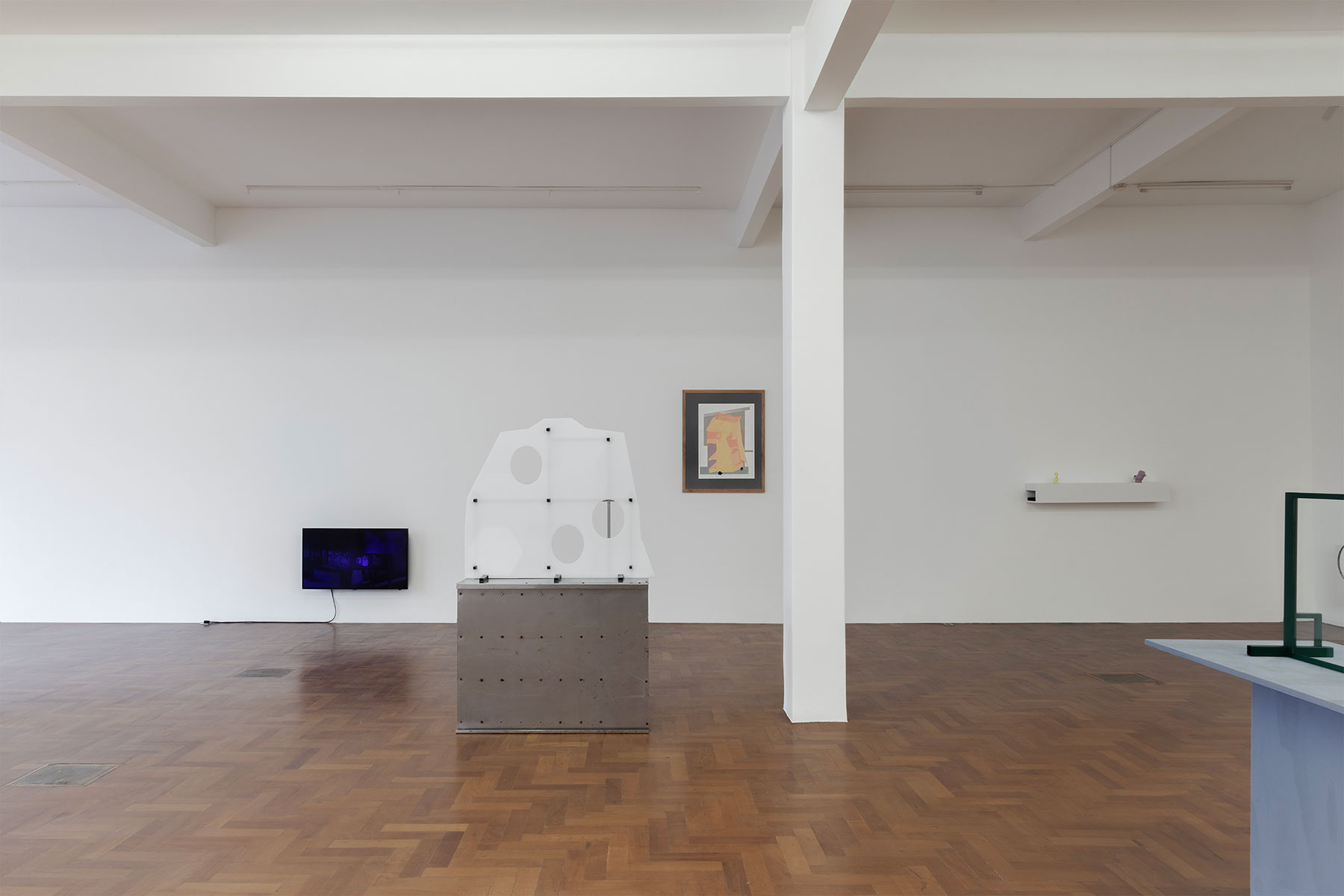
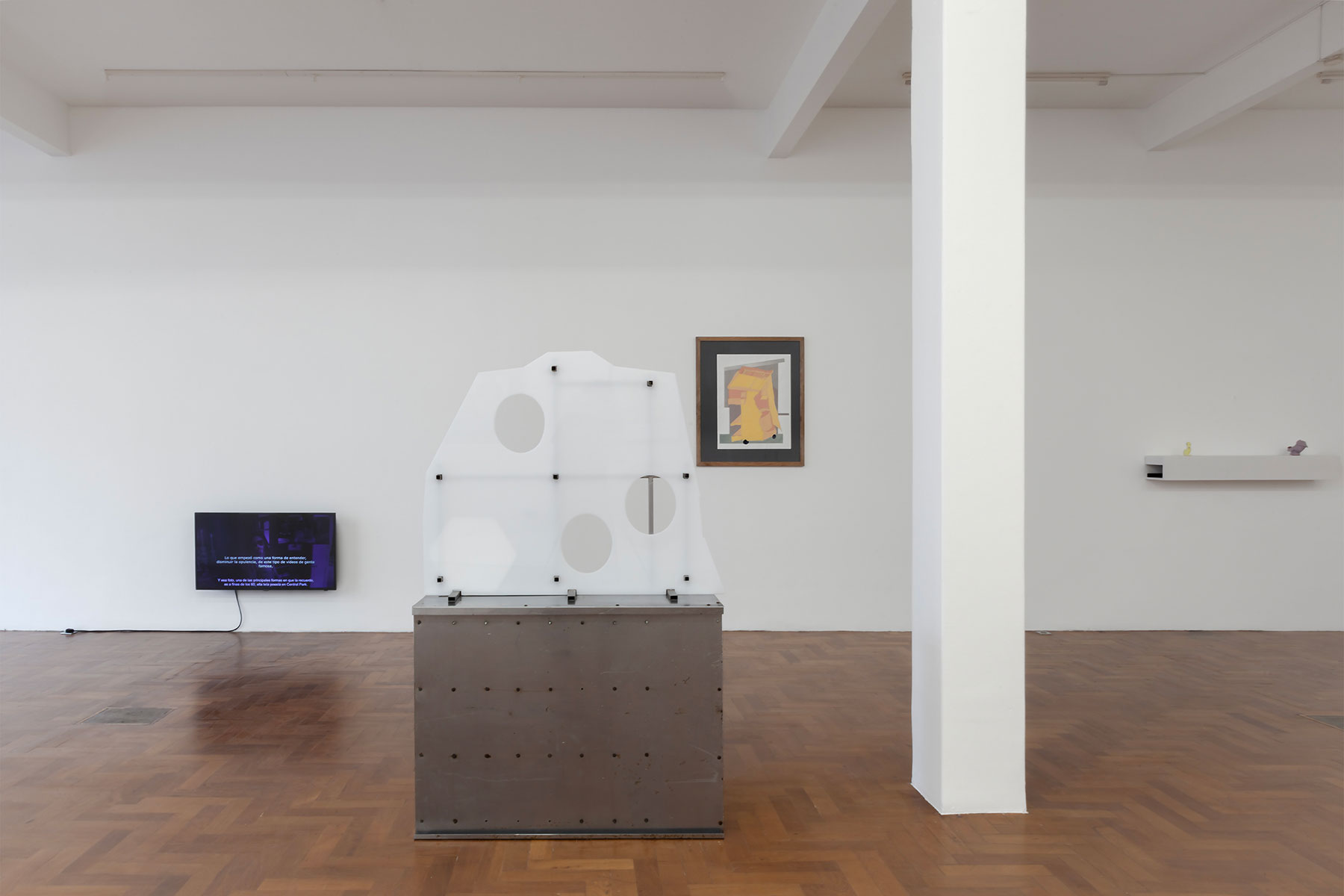
The series Mostradores began in 2020, when the rapid spread of the pandemic prompted the invention of devices designed to enforce social distancing, forcing the Swiss to do something that does not come naturally to them: improvise. These makeshift structures captivated the artist because he recognized in them a material culture that felt unmistakably Argentine, one always capable of holding things together with whatever happens to be at hand. The works in this series unfold through a series of tensions and displacements, suspended between the “here” and the “there” that shape the experience of migration.
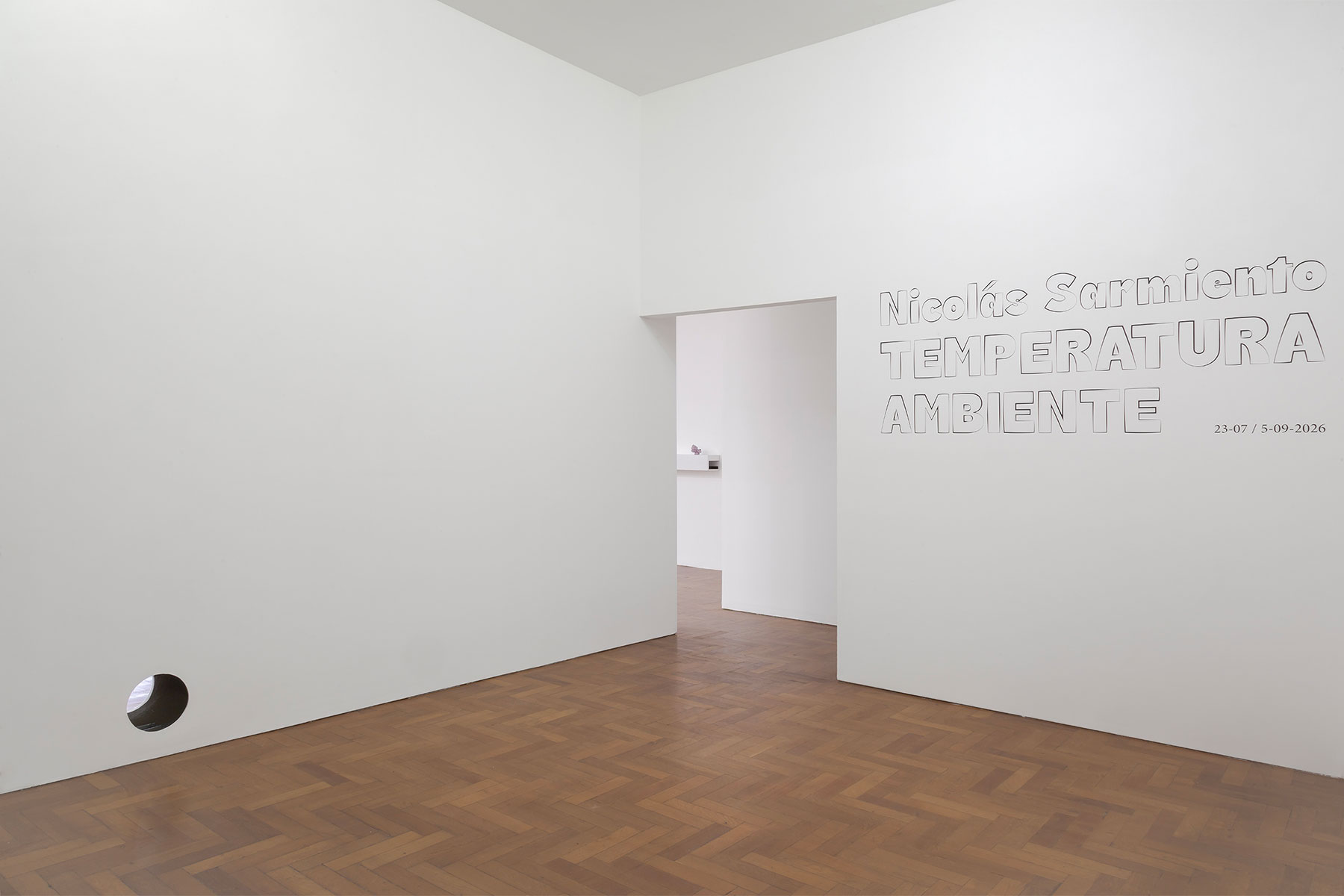
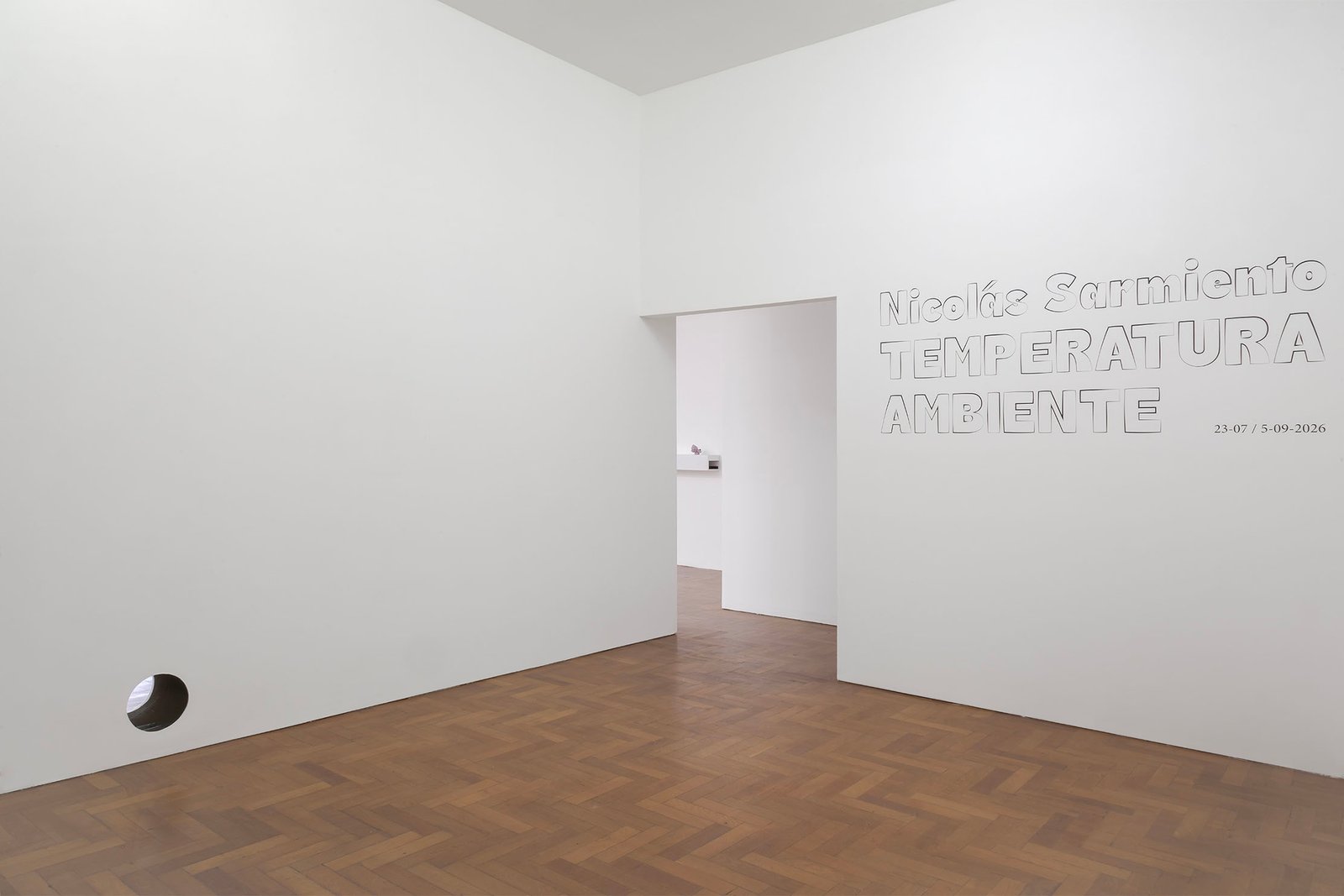
To linger over these objects, as ordinary as they are unremarkable, over their structures and components, is to consider the almost imperceptible ways in which our surroundings are shaped and the social relations they sustain. Even the gallery wall is punctured, and it is the opening that makes the wall itself visible. These minimal interventions bring to light what has always been there, transforming space itself into the object of attention.
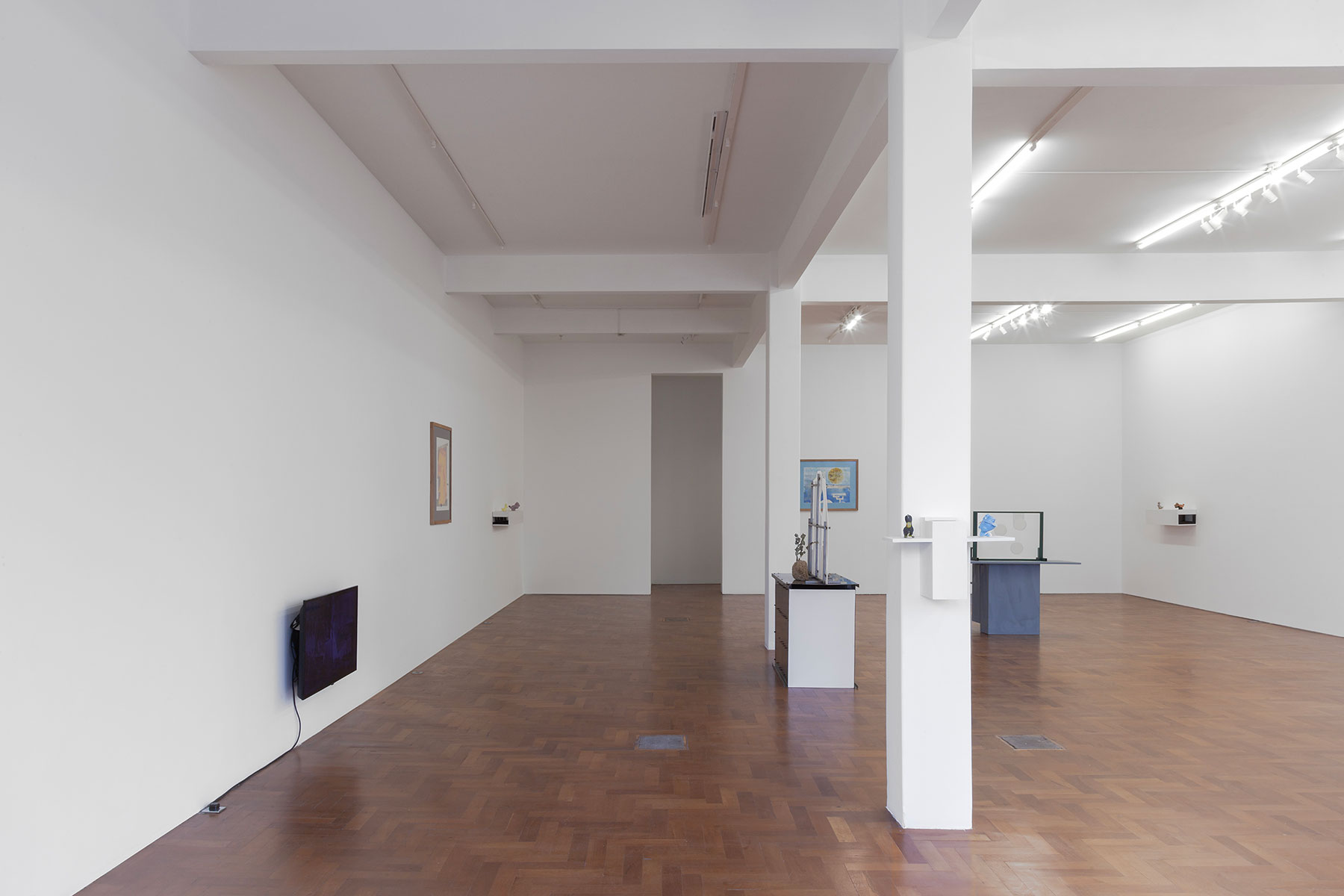
Nicolás approaches the design of his works with meticulous care and precision, though intuition always comes first: an inexplicable attraction, a visceral certainty. The series of small sculptures, Portación de gravedad, began with a chance encounter. Four years ago, in an antique and bric-a-brac shop in the Buenos Aires neighborhood of Villa Crespo, the artist came across a cold-porcelain figurine depicting a turtle that could easily have been made by an amateur craft enthusiast: unfinished, eyeless, with an oversized head and a ladybug resting on its shell. Shortly afterwards, he found another figurine of similar size, this time an industrially produced ceramic duck, elegant and white, with a ladybug perched on its beak. Connected only by the accidental presence of that insect, the two objects prompted Sarmiento to reproduce them in glazed ceramic. The resulting multiples are displayed on wooden shelves with a metal skeleton, while the originals, like relics, remain temporarily concealed.
_Tráfico con la realidad. Como un pato mirando un complejo arquitectónico III_ continues a series in which Sarmiento assembles YouTube house-tour videos of celebrities’ lavish homes, filtering the footage until the entire image is darkened and visibility impaired. Like looking at a screen with the brightness turned all the way down, the viewer must discern opulence through darkness. In this new chapter, the montage becomes more intricate: a tour of Lenny Kravitz’s Paris home is interwoven with footage of a Japanese man meticulously preparing coffee and recordings made by Sarmiento himself at his grandmother’s house in Marcos Paz, at the Museo de la Cárcova, and of the gallery’s rear façade. This succession of disparate spaces, defined as much by their architectures as by the objects they contain, moves between scrapyard and elegance, storage room and bedroom, public and private. We enter the musician’s home like thieves in the night through the front door and, without a break in continuity, emerge into the building that once served as stables along the Río de la Plata waterfront.
In the painting Ventanilla de entrada con lunas, the artist seems to leave us a clue. A nearly transparent inscription reads: “information / noise / visualization.” Sarmiento operates on that middle term, on what both obstructs and enables encounter. There is always a degree of “noise” that prevents us from fully accessing things. Exchange does not occur despite interference, but through it. When Nicolás turns up the volume, the very conditions of possibility come to the fore.
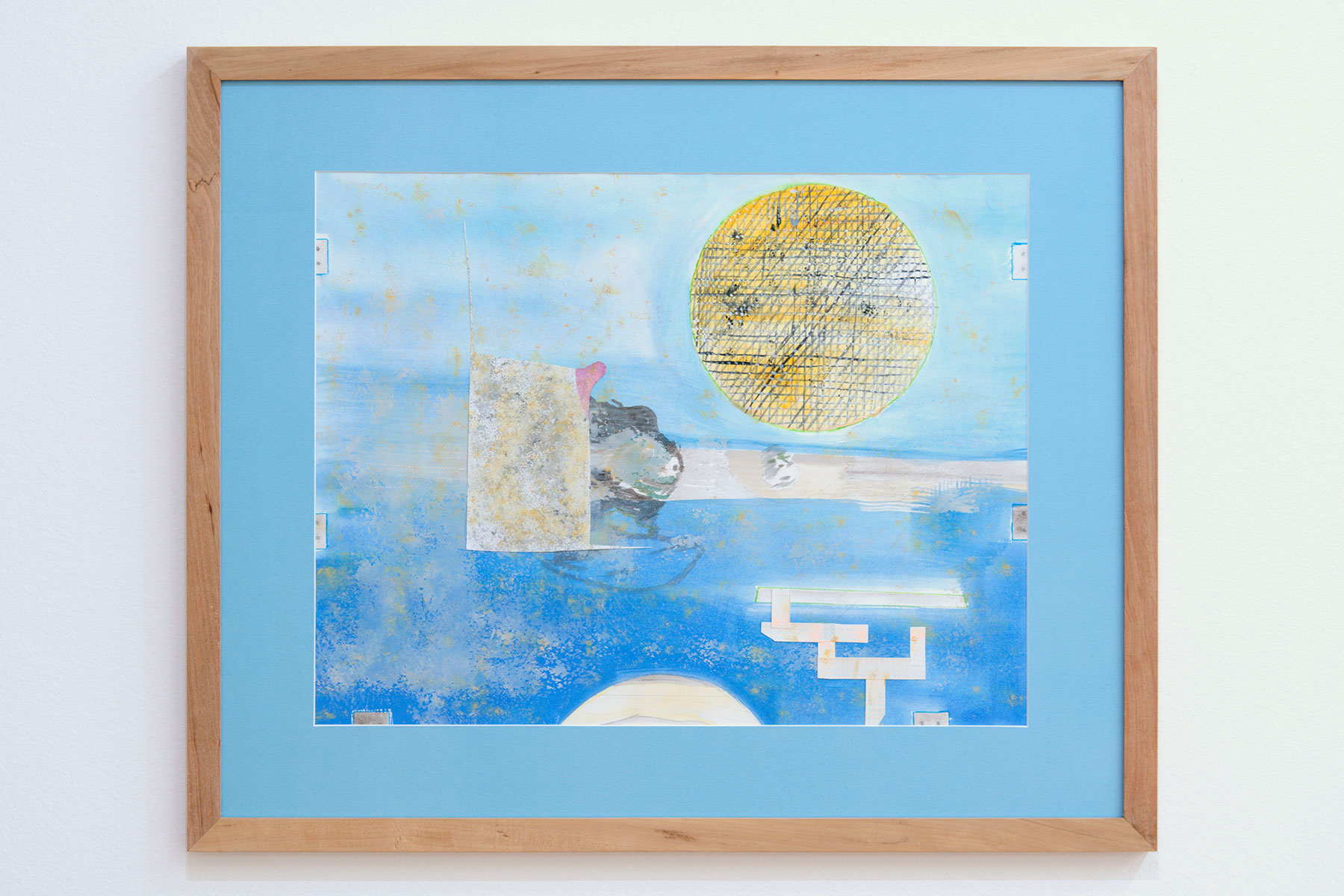
VENTANILLA DE ENTRADA, 2026
Gouache, pencil, and collage on paper.
72 x 87 cm.
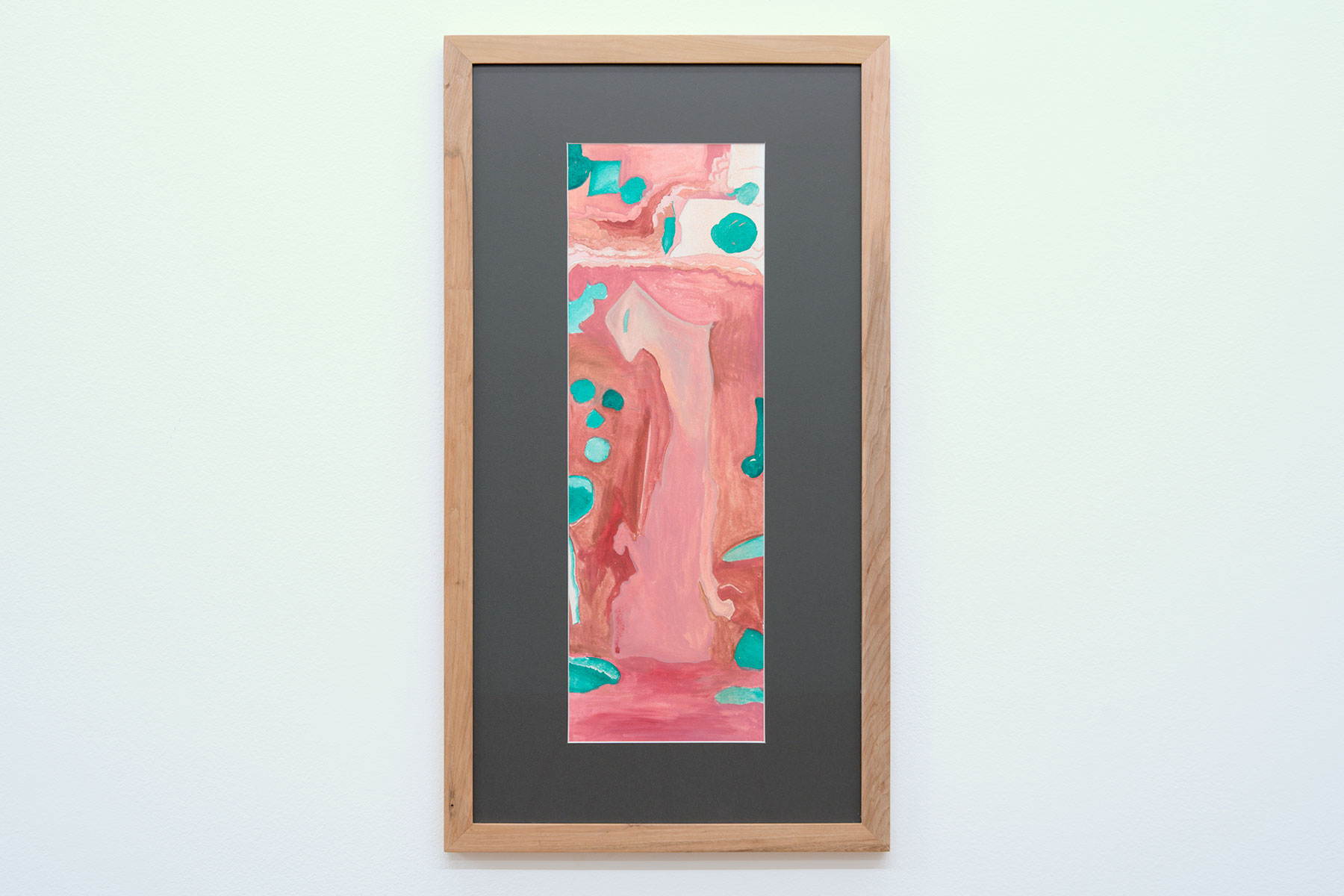
VIRAL, 2026
Gouache and pencil on paper.
87 x 47 cm.
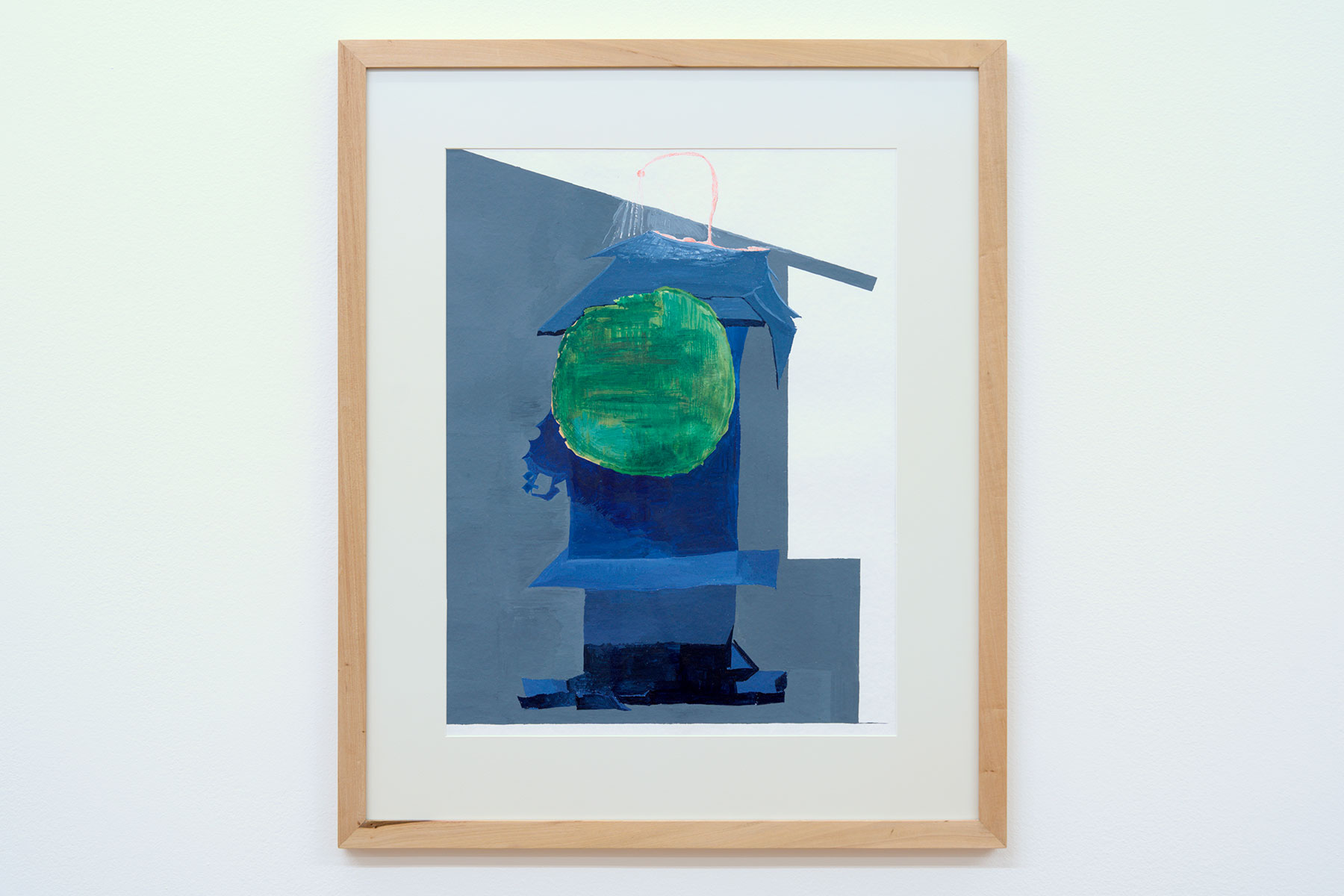
ATRIL CON LÁMPARA Y LATÓN, 2026
Gouache and pencil on paper.
87 x 72 cm.
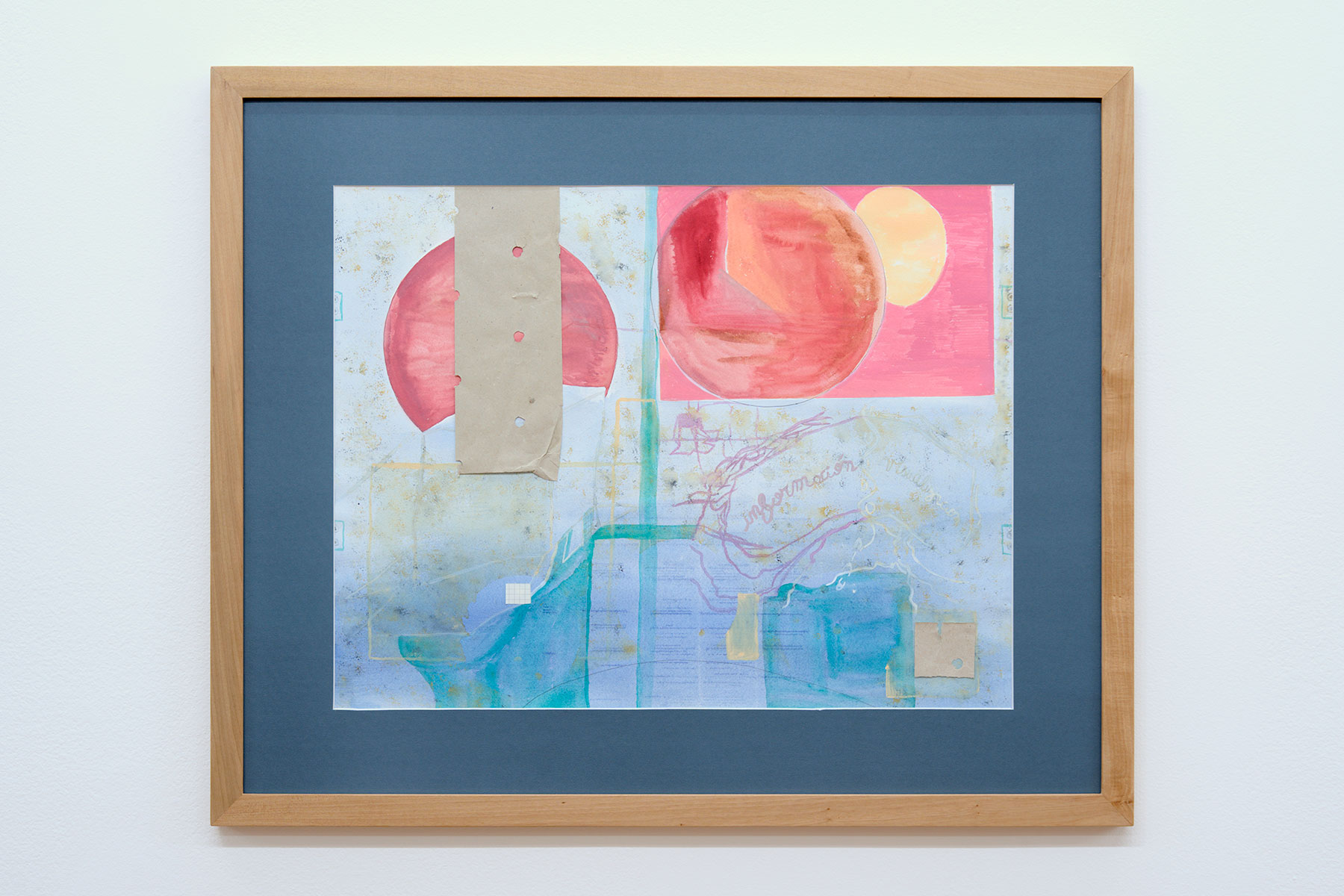
VENTANILLA DE ENTRADA CON LUNAS, 2026
Gouache, pencil, and collage on paper.
72 x 87 cm.
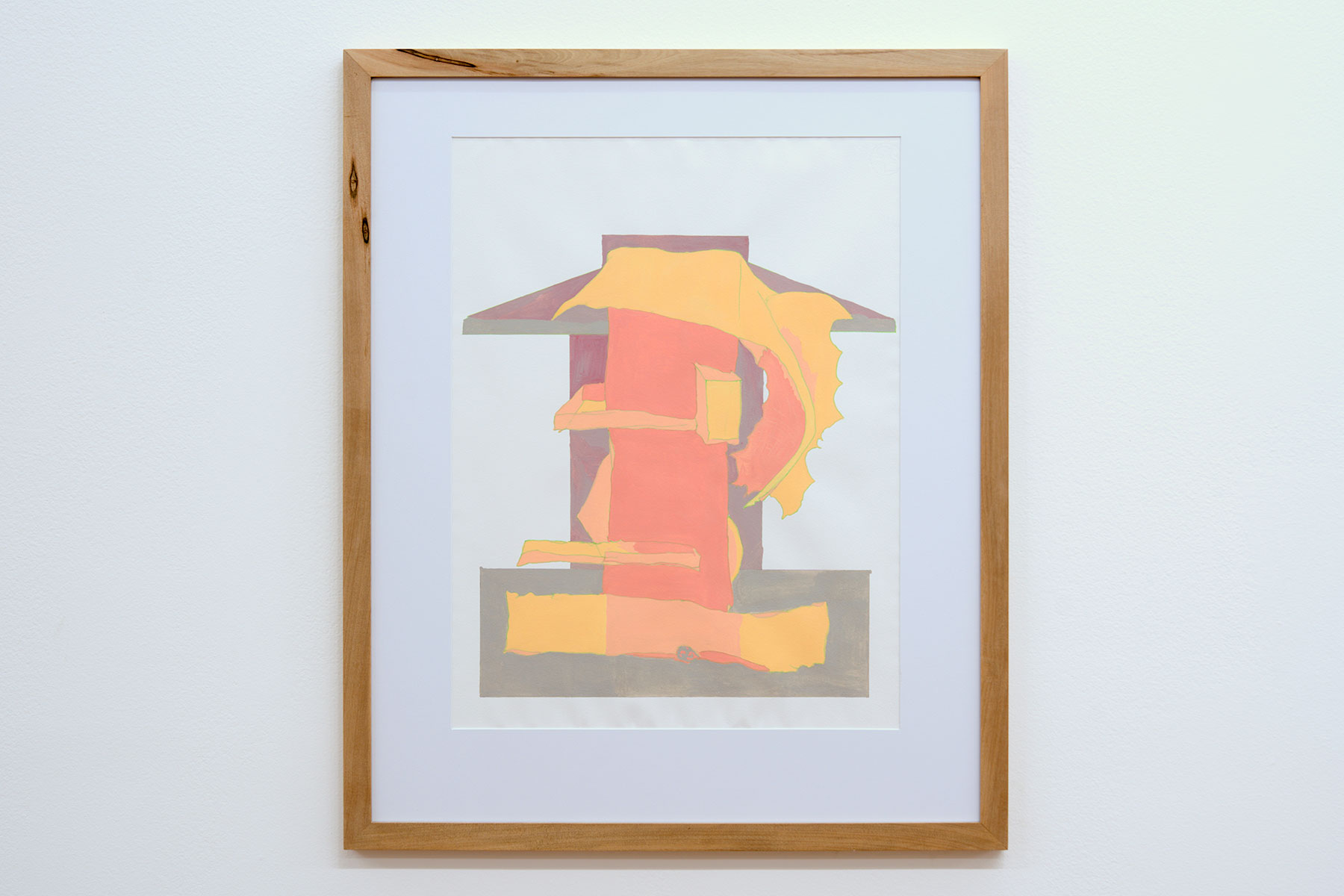
ATRIL CON COVACHA, 2026
Gouache and pencil on paper.
87 x 72 cm.
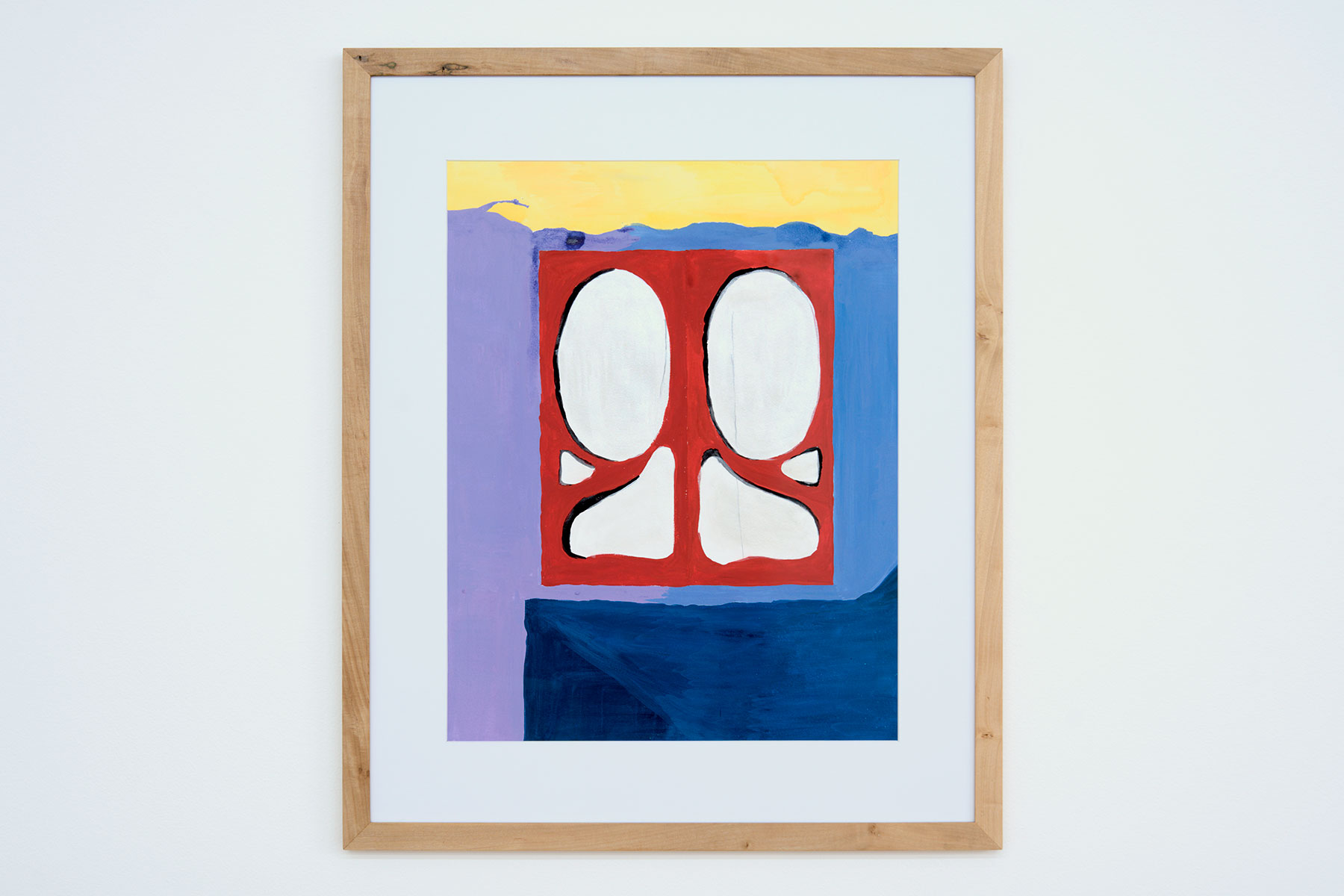
CABALLERIZA DEL EX-SENASA O DEPENDENCIA DE LA CÁRCOVA, 2026
Gouache and pencil on paper.
87 x 72 cm.
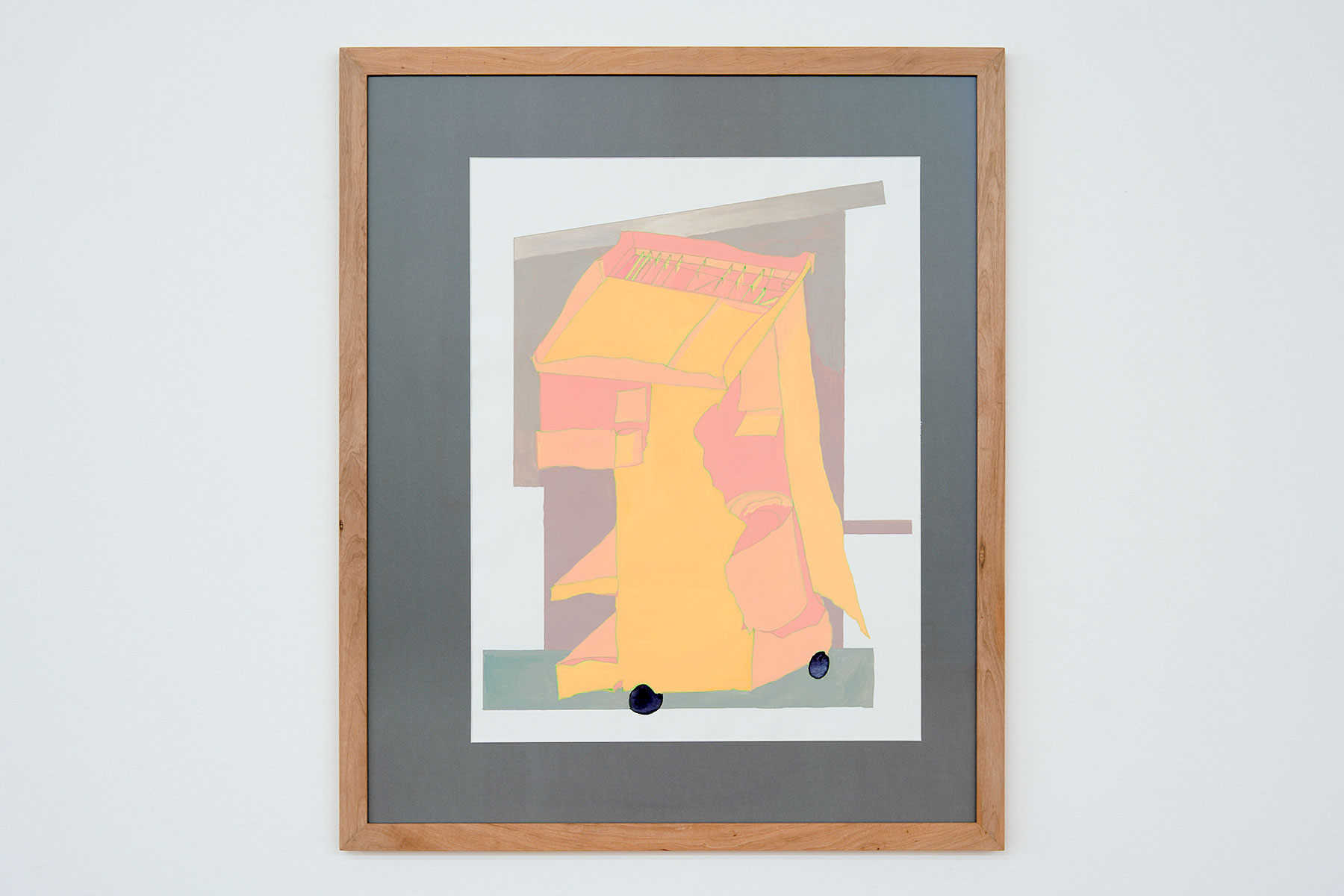
ATRIL CON RUEDAS, 2026
Gouache and pencil on paper.
87 x 72 cm.
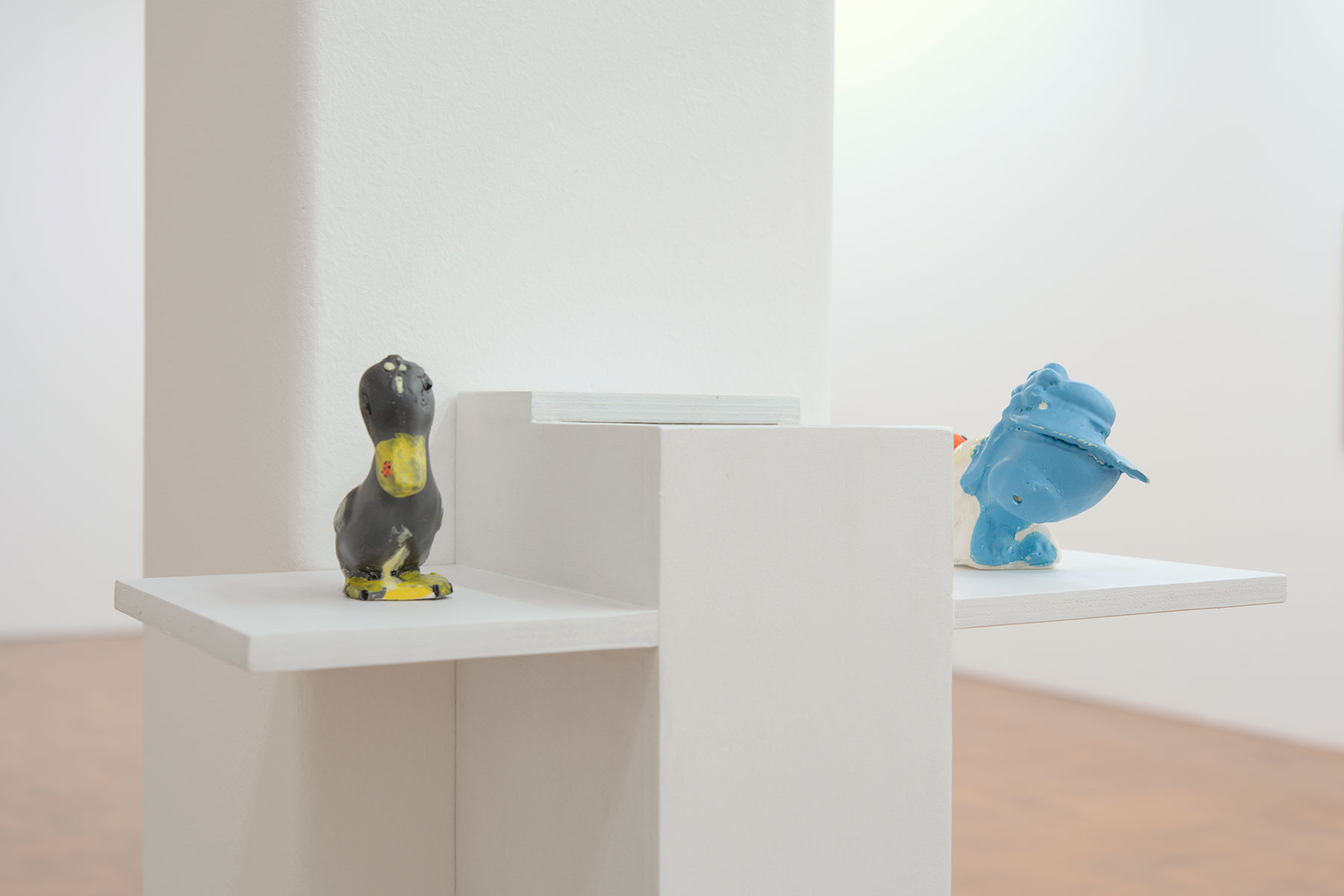
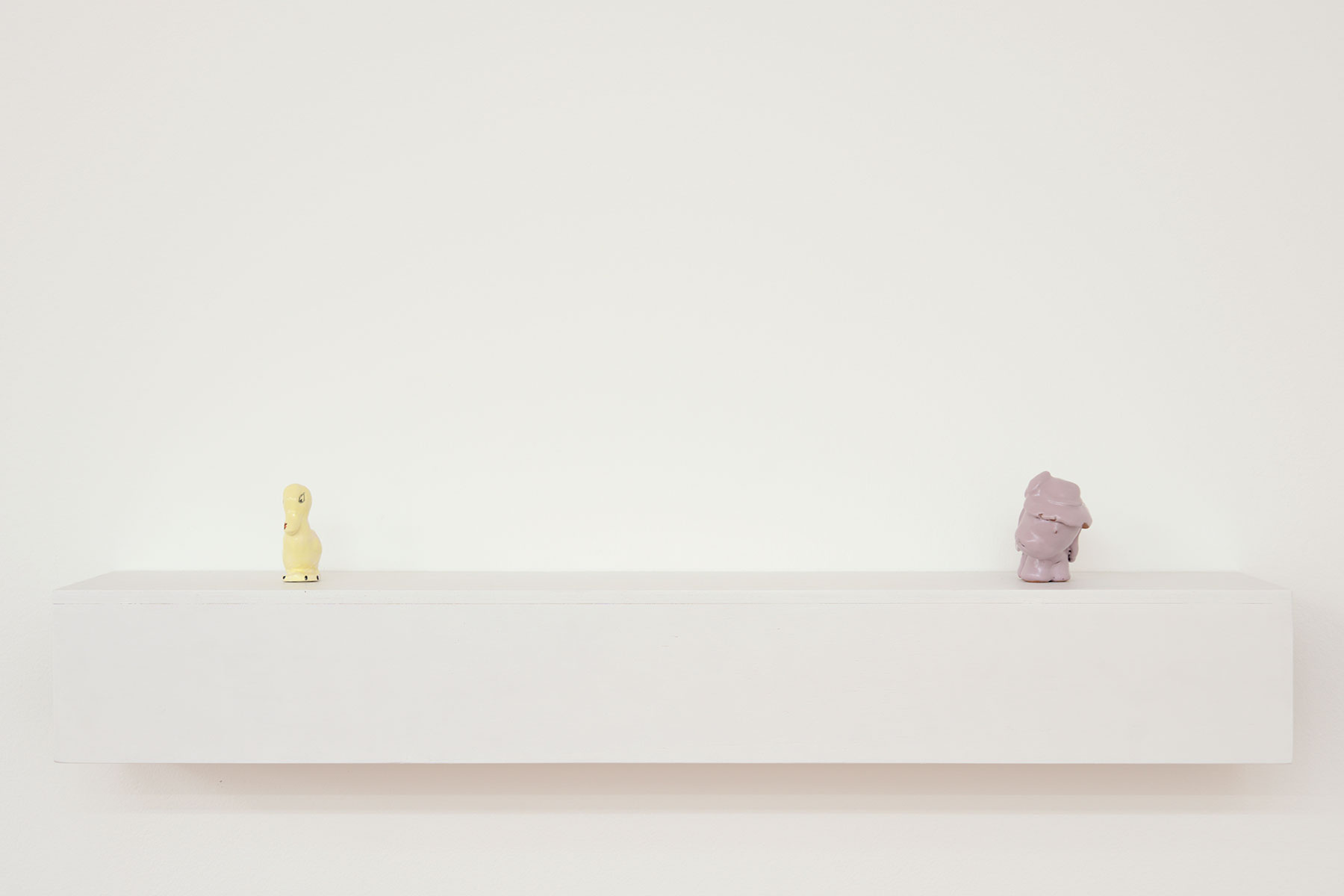
PORTACIÓN DE GRAVEDAD (ELONGADA), 2026
Glazed ceramic, wooden structure and steel structure, both painted with synthetic enamel..
26 x 113 x 20 cm.
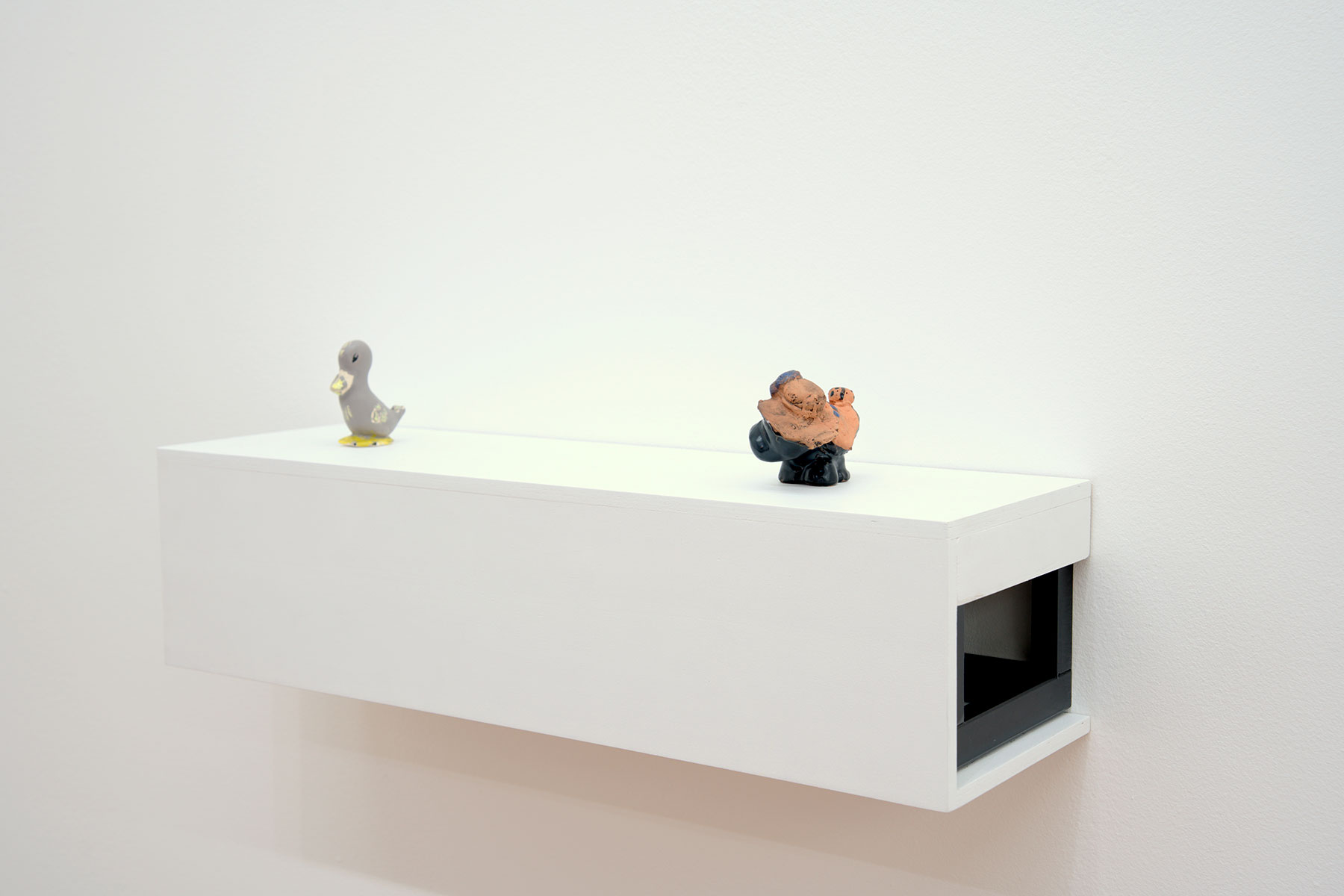
PORTACIÓN DE GRAVEDAD (CORTEZA), 2026
Glazed ceramic, wooden structure and steel structure, both painted with synthetic enamel..
29 x 76 x 22,5 cm.
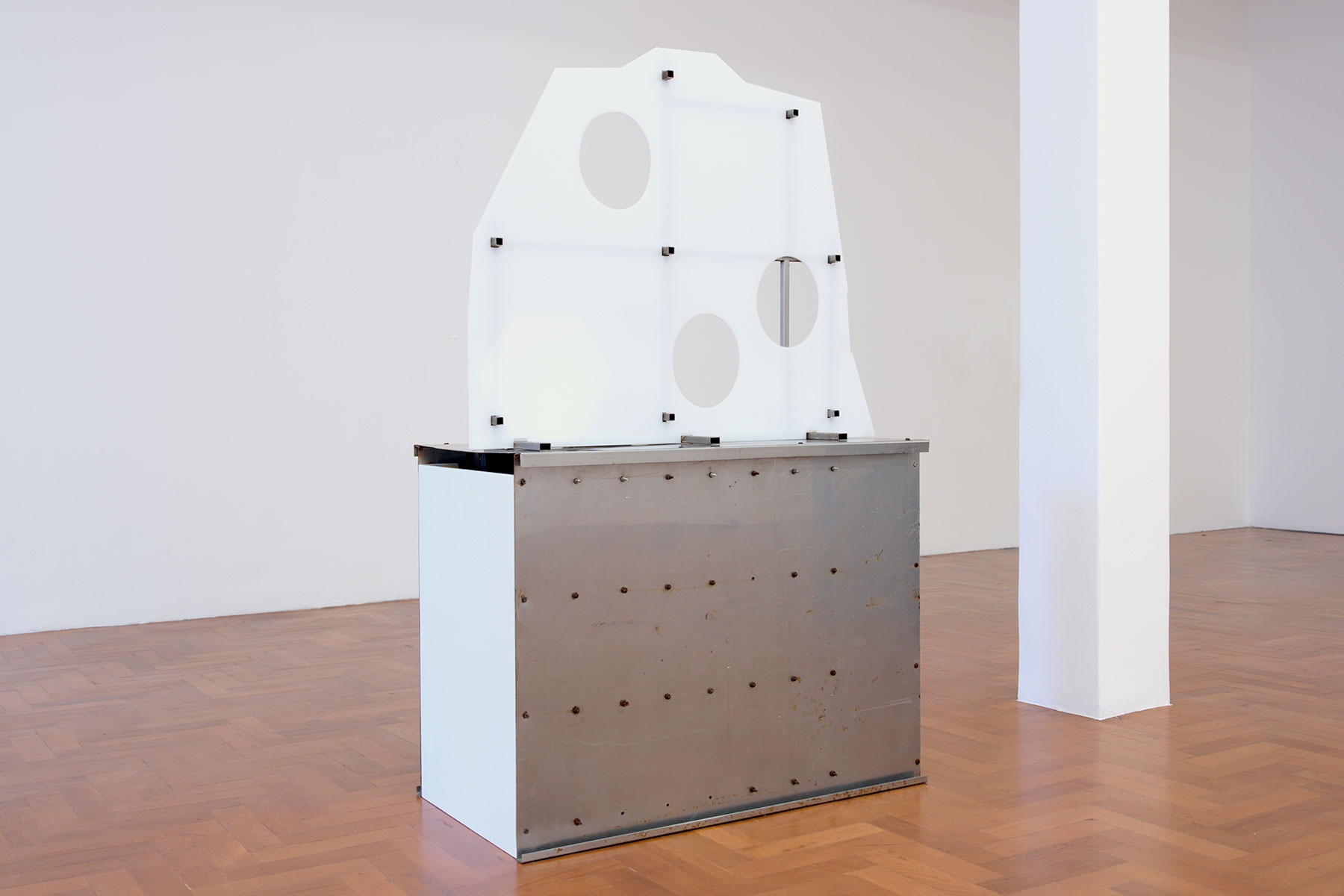
MOSTRADOR DEL INTERIOR, 2026
Metal structure, screws, nuts, sponge, eucalyptus, silk fabric, and acrylic sheet.
153 x 52 x 96 cm.
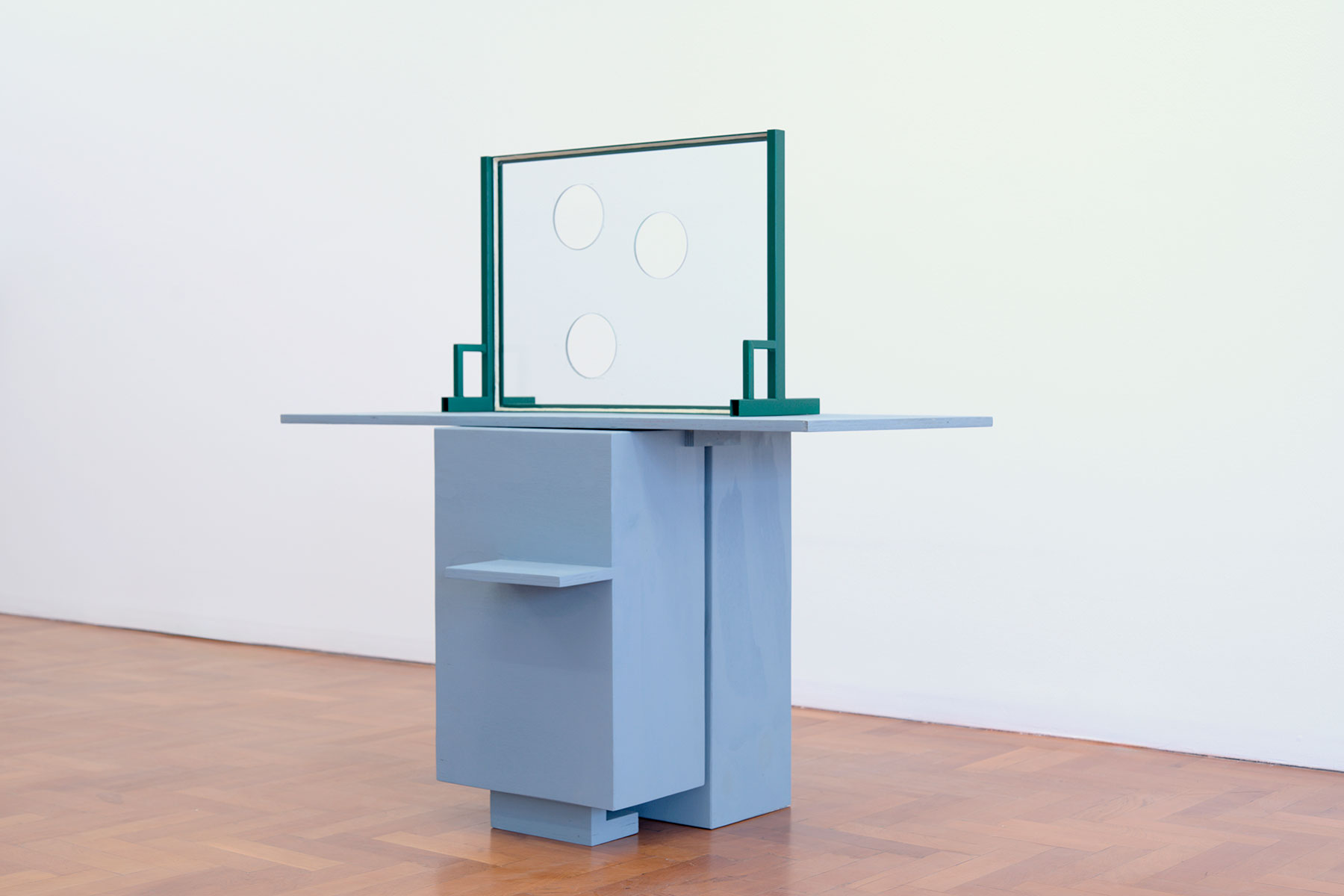
MOSTRADOR ADMIN, 2026
Glass with perforations, glazier’s putty, wooden structure and steel structure, both painted with synthetic enamel..
122 x 77 x 120 cm.
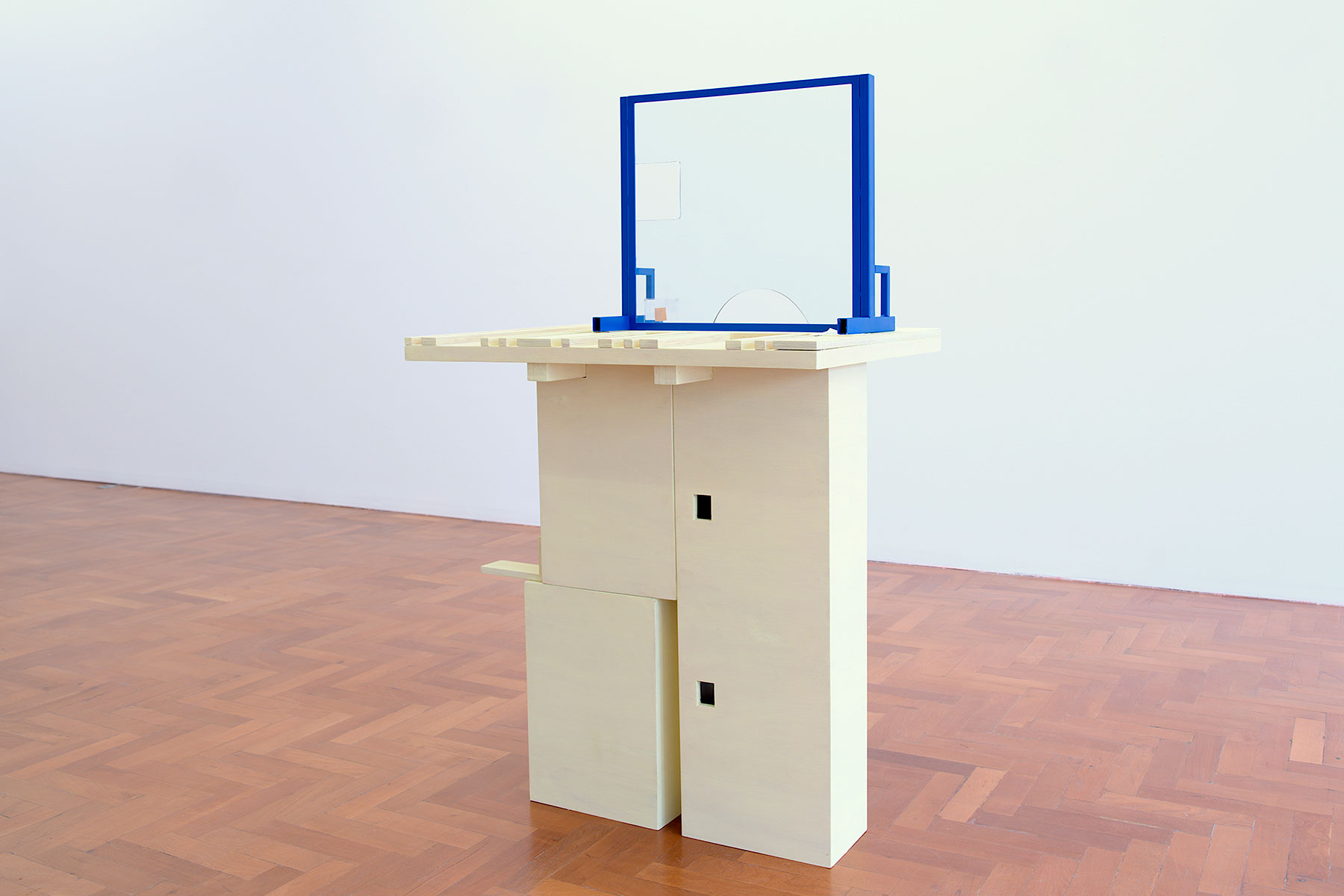
MOSTRADOR DESEMPEÑO AL RÍO, 2026
Glass with perforations, glazier’s putty, wooden structure and steel structure, both painted with synthetic enamel. Cardboard, paper, magnifying glass, collage, and buckle.
150 x 66 x 91 cm.
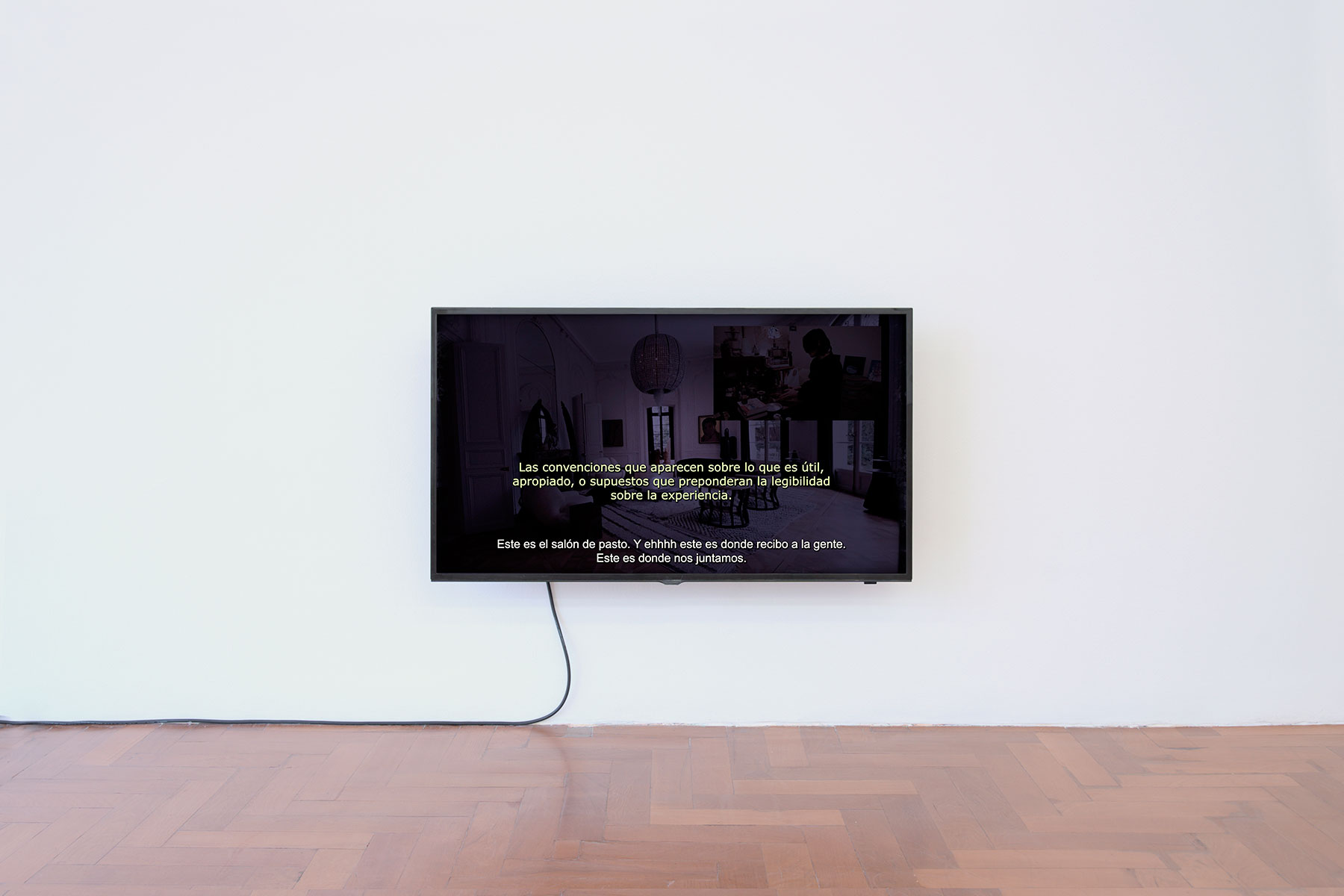
_TRÁFICO CON LA REALIDAD_COMO UN PATO MIRANDO UN COMPENDIO ARQUITECTÓNICO III, 2026
Full HD video.
24:37min.